
Table of Contents
- The Real ROI of Tennis Footwork Training
- Tennis Footwork Drills for Beginners: Starting Without Breaking the Bank
- How Long Does a Tennis Footwork Training Program Duration Actually Take to Show Results
- Online Tennis Coaching Cost: What You’re Actually Paying For
- Common Footwork Training Mistakes That Waste Your Money
- Who Should Invest in Professional Footwork Training
- Conclusion: Making the Right Decision for Your Game
- Frequently Asked Questions
Last Updated: September 20, 2026
The Real ROI of Tennis Footwork Training
Is tennis footwork training worth the cost? The answer depends entirely on your skill level, current performance plateau, and how you define “worth.”
Most players underestimate how much their footwork limits their game. Poor positioning costs you points before your racket ever touches the ball, you miss balls you should reach, hit from unbalanced stances, and tire faster covering the same court. Footwork is the foundation everything else rests on.
The real question is whether you should pay for structured training or build it yourself with free resources. Players who commit to deliberate footwork work see measurable court improvements within 4-8 weeks.
But here’s what most guides miss: not every player needs professional training to improve footwork. Your decision should hinge on three factors: your current skill level, how much time you can dedicate to practice, and whether you can execute drills correctly without real-time feedback.
Tennis Footwork Drills for Beginners: Starting Without Breaking the Bank
Free resources teach the core movement patterns every tennis player needs. These platforms show you WHAT to do.
The catch: they don’t show you if you’re doing it right. Video instruction teaches movement patterns in isolation; on court, your footwork gets sloppy under pressure and you develop compensations without knowing it.
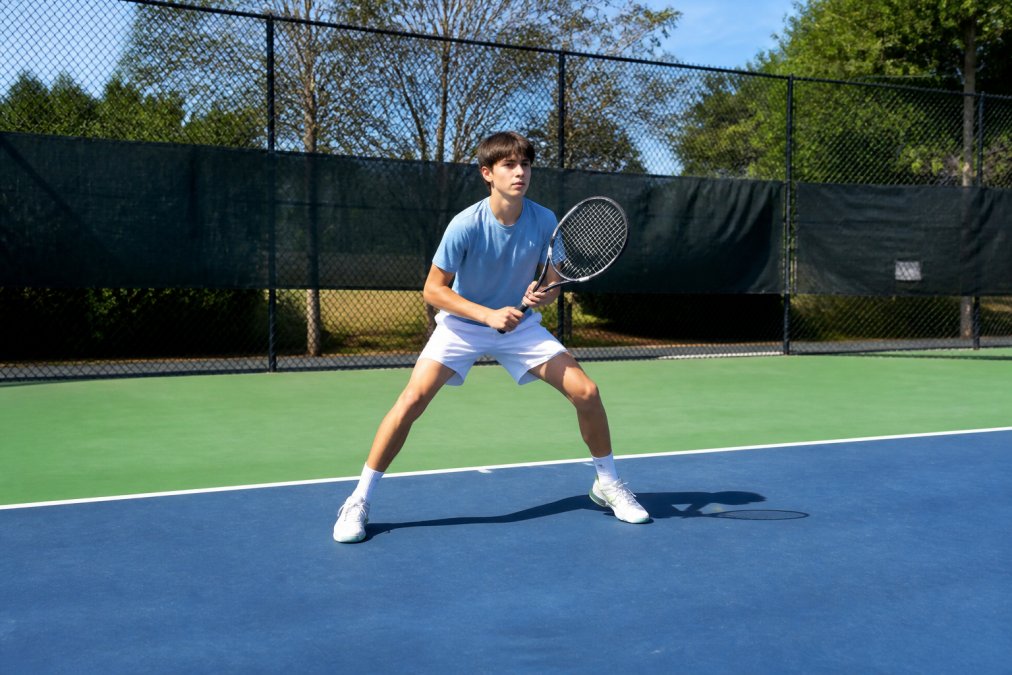
Core drills include split step timing, first-step quickness, lateral shuffle, recovery steps, and balance transitions. Most beginners can learn these from free video content. Paid programs add value through real-time correction, something YouTube cannot provide.
How Long Does a Tennis Footwork Training Program Duration Actually Take to Show Results
Most players see noticeable changes in 4-6 weeks of consistent work (3-4 sessions per week). The cost-benefit calculation depends on what you’re paying per week of improvement.
Week-by-Week Progression
Here’s what realistic progression looks like:
- Weeks 1-2: Movement feels awkward and deliberate; court coverage may feel worse as you concentrate on technique.
- Weeks 3-4: Movement smooths out; court coverage improves noticeably. Most players feel their first tangible return on investment here.
- Weeks 5-8: Footwork integrates with your stroke; match play reflects improvement.
- Weeks 8-12: Footwork becomes instinctive; consistency improves significantly.
The DIY vs. Structured Program Timeline Trade-Off
Structured programs compress this timeline by providing progression-based drills that build systematically. Free resources often jump between concepts without logical sequence, extending the timeline to 8-12 weeks or longer.
- Free YouTube/Social Media: $0 upfront, 8-12 weeks to results. Hidden cost: most plateau after 6-8 weeks without feedback.
- Structured online program ($200-$500): $25-$62.50/week, compresses timeline to 4-6 weeks.
- Private coaching ($150/hour, $2,400 for 8 weeks): $300/week, results in 3-4 weeks. Justified only for near-term tournaments or injury history.
The Critical Variable: Practice Frequency
Practice frequency matters most: once-per-week practice extends results to 8-12 weeks regardless of program type. If you have 12 weeks before a tournament and limited practice time, a structured program ($300-$500) ensures efficient use of drills. With 6 months and 4 weekly sessions, free resources may suffice.
Measuring Your Return on Investment
Track these metrics: court coverage (20-30% improvement in reach), consistency (15-25% reduction in unforced errors), rally length (2-3 shot increase), and match results (10-15% win increase). Structured programs deliver faster ROI because they include progress checkpoints.
Online Tennis Coaching Cost: What You’re Actually Paying For
Online coaching pays for structure, accountability, and feedback mechanisms that free content doesn’t provide.
Private In-Person Coaching vs. Online Platforms
Private coaching delivers real-time correction. Online platforms offer structured curricula at lower cost but require more self-discipline.
Free Resources vs. Paid Programs
This comparison reveals where your money actually goes:
| Resource Type | Cost | What You Get | What You Don’t Get |
|---|---|---|---|
| YouTube/Social Media (Free) | $0 | Video demonstrations, basic drill concepts | Personalized feedback, progression structure, accountability |
| PlayYourCourt (Contact for pricing) | Variable | Technical breakdowns, structured drills, error identification | Real-time feedback, personalized correction |
| Crunch Time Coaching | Variable | Daily lessons, challenge curriculum, in-person camps, mental toughness training | Per-session pricing flexibility |
| Private Coaching ($150/hour) | $1,800-$2,400 for 8 weeks | Personalized feedback, real-time correction, custom lesson plans | Scalability, structured progression library |
Free resources require exceptional discipline; most players develop compensations and plateau without feedback. Paid programs accelerate learning through structure.
Common Footwork Training Mistakes That Waste Your Money
Even when players invest in training, they sabotage their results through preventable mistakes. Some are execution errors; others are structural decisions that inflate costs without improving outcomes.
Execution Mistakes
Mistake 1: Practicing footwork drills without match context. Many programs teach footwork in isolation without connecting to shot preparation. After drilling patterns, immediately practice them during rallies or point play so footwork integrates with your stroke.
Mistake 2: Inconsistent practice frequency. Three 30-minute sessions per week work better than one 90-minute session. Your nervous system needs regular repetition. Treating footwork practice as optional guarantees slow progress and wasted money.
Mistake 3: Ignoring court surface adaptation. Clay, hard, and grass courts demand different footwork. If you play primarily on one surface, ensure your training is optimized for it.
Mistake 4: Skipping the balance component. Footwork isn’t just speed; it’s positioning yourself to hit from a balanced stance. Effective training integrates balance work from the beginning.
Mistake 5: Not measuring progress. Track court coverage, consistency, and rally length. If you can’t measure it, you can’t justify the cost.
Cost-Structure Mistakes
Mistake 6: Buying specialized equipment when bodyweight drills work just as well. Split steps, lateral shuffles, and recovery footwork need only a tennis court and your body weight. Specialized equipment becomes valuable only after mastering basics (4-6 weeks). Verify whether your paid program requires equipment; many use bodyweight-only drills, keeping your investment purely in instruction.
Mistake 7: Paying for private coaching when a structured online program would suffice. Private coaching is justified for specific technical flaws or near-term competition. For most players with 8-12 weeks, a structured program delivers significant results at a lower cost.
Injury-Specific Footwork Modifications (The Overlooked Cost Factor)
If you have a history of movement-related injuries, standard footwork training can actually worsen the problem or cause re-injury. This is where many players waste money on programs that don’t account for their physical limitations.
Achilles tendon issues: Standard footwork drills emphasize explosive first-step quickness and rapid weight transfer, both of which stress the Achilles. If you have Achilles tendinopathy, you need modified drills that emphasize controlled lateral movement and reduced plyometric load. Most generic programs don’t offer this modification. You either have to pay extra for injury-specific coaching or risk re-injury while following a standard program. The solution: before investing in any footwork program, disclose any injury history to the program provider and ask specifically how they modify drills for your condition. If they don’t have a clear answer, the program isn’t worth the cost for you.
Knee pain (patellofemoral or meniscus issues): Lateral shuffles and rapid direction changes stress the knee. Modified footwork for knee issues emphasizes smaller steps, reduced deceleration forces, and controlled weight transfer. Again, most programs don’t address this. A player with knee pain following a standard footwork program may see short-term improvement followed by re-injury, making the investment a net loss.
Ankle instability: Players with a history of ankle sprains need footwork training that emphasizes proprioceptive control and gradual loading, not rapid lateral movement. Standard programs often skip this foundation, leading to re-injury.
The cost implication: if you have any of these injury histories, a generic program may cost you more in physical therapy and lost training time if it triggers re-injury. Investing in injury-specific coaching or a program that explicitly addresses your condition is the smarter financial decision.
Who Should Invest in Professional Footwork Training
Not every player needs to pay for footwork training. Your decision should depend on where you are in your tennis journey.
Invest in professional training if:
Skip professional training if:
Conclusion: Making the Right Decision for Your Game
Tennis footwork training is worth the cost if you’re committed to executing it consistently and measuring results. The question isn’t whether footwork matters, it absolutely does. The question is whether you need professional guidance to improve it effectively.
Frequently Asked Questions
Is tennis footwork training worth the cost for competitive players?
Yes, if you’re competing in tournaments or leagues. Proper footwork directly improves court coverage, anticipation, and shot consistency, the core factors that separate winning players from those stuck on a plateau. The investment pays off through faster match wins and longer career longevity. However, casual recreational players may see sufficient improvement through free resources and self-guided drills.
How long does a tennis footwork training program duration typically take to show measurable improvement?
Most structured programs show noticeable changes in movement efficiency and court positioning within 4-6 weeks of consistent practice. Significant improvements in match performance, faster recovery steps, better anticipation, reduced unforced errors, typically emerge after 8-12 weeks. Long-term skill retention and automatic footwork patterns develop over 3-6 months of dedicated training with proper reinforcement.
What’s the difference between paying for online tennis coaching cost versus free YouTube instruction?
Paid programs offer personalized feedback, accountability, structured progressions, and real-time correction of your specific movement flaws. Free resources provide foundational knowledge and drills but lack accountability and individualized modifications for your biomechanics or injury history. For competitive players, the personalized element justifies the cost; for beginners exploring the sport, free resources are sufficient to start.
Can I get the same results from DIY tennis footwork drills for beginners as from paid coaching?
DIY drills work well for learning basic movement patterns and building initial agility, especially if you’re new to structured training. However, without expert feedback, you’ll likely develop compensatory movement habits that limit your ceiling. Paid coaching accelerates your progress by correcting these errors early and preventing injury-prone patterns.
At 47, returning to tennis after 15 years, is professional footwork training worth the investment?
Yes, especially at this stage. Professional footwork training emphasizes injury prevention, proper weight transfer, and movement efficiency, all critical for masters-level players. Investing early prevents compensatory patterns that cause chronic issues later. Many 40+ players see faster improvement with coached footwork than younger players because they’re more coachable and focused. The cost is offset by avoiding expensive injury rehab and extending your competitive playing years.