
Table of Contents
- Understanding Tennis Serve Grip Variations and Spin
- The Continental Grip: Your Baseline Serve Foundation
- Flat Serve Grip: Power and Pace
- Slice Serve Grip: Control and Sidespin
- Kick Serve Grip: Topspin and High Bounce
- Common Tennis Serve Grip Mistakes and How to Fix Them
- Progressive Drills for Learning Spin-Specific Grips
- Troubleshooting Serve Outcomes by Grip Position
- Why Crunch Time Coaching Transforms Serve Consistency
- Frequently Asked Questions
Last Updated: October 14, 2026
Understanding Tennis Serve Grip Variations and Spin
How you grip your racket changes what your serve can do. Shift your hand slightly on the handle and you alter the angle at which the strings meet the ball, determining whether your serve produces a flat trajectory, a slice curve, or the heavy topspin of a kick serve.
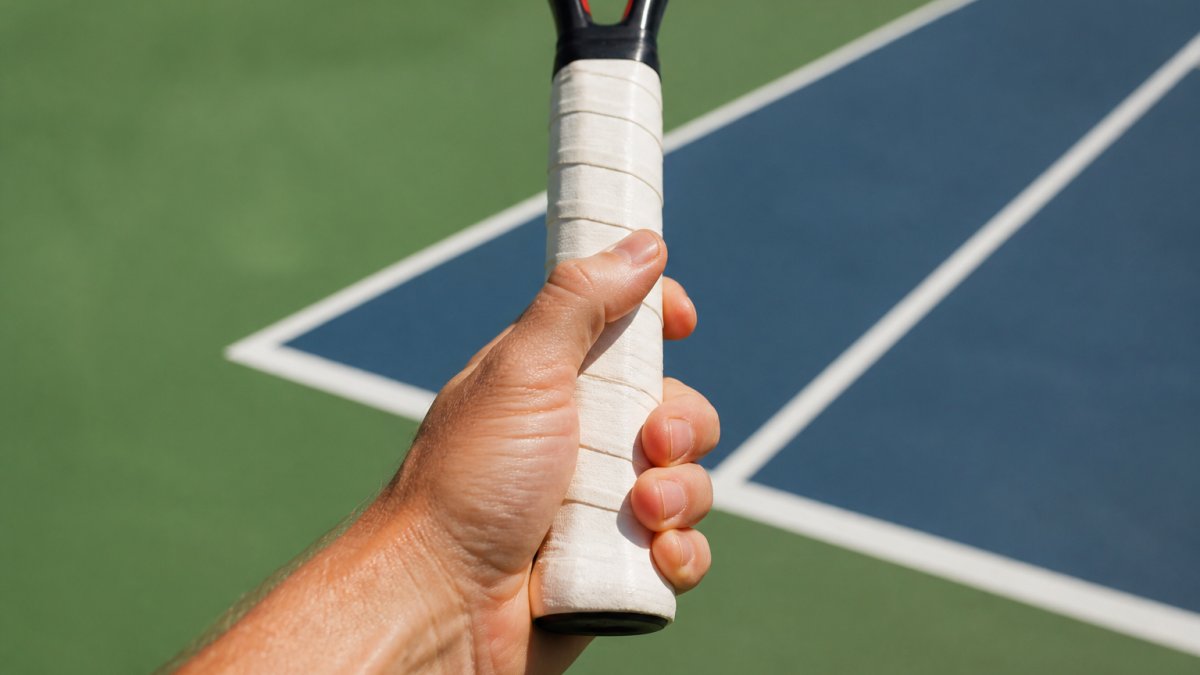
The grip you choose is the foundation of serve consistency and spin control.
How Grip Position Affects Racket Face Angle
Your racket handle is divided into eight bevels, like a clock face.
A grip on bevel one (the Continental) closes the racket face slightly, favoring flat and slice serves.
Most players don’t consciously think about bevels, but when your serve isn’t doing what you want, the bevel is often the culprit.
The Role of Grip Bevels in Serve Placement
Understanding grip bevels transforms how you troubleshoot serve problems. If your serve consistently lands long, check your grip bevel first: a grip too far toward the forehand opens the racket face, sending the ball higher and deeper.
Conversely, if your serve clips the net, your grip may be too far toward the backhand side, closing the face too much.
The Continental Grip: Your Baseline Serve Foundation
The Continental grip is the standard for a reason: most professionals use it because it works across multiple spin types without major adjustment. If you’re learning serve variations, start here.
Continental Grip Placement on the Racket Handle
The Continental grip sits on bevel one, the edge of the handle closest to your thumb when you extend your arm.
This position feels awkward at first if you’re used to forehand or backhand grips. That’s normal.
The V formed by your thumb and index finger points toward your right shoulder (for right-handers), allowing your forearm to pronate naturally, critical for spin generation.
Why Continental Works for Multiple Spin Types
For a slice from the same grip, you brush the outside of the ball with a slightly sideways arm motion, no re-gripping mid-motion.
The kick serve, the most demanding of the three, also works from Continental.
This flexibility is why the Continental is the foundation: once you master it, spin variations become about swing path and pronation, not grip repositioning.
Flat Serve Grip: Power and Pace
A flat serve prioritizes racket head speed and a direct ball path. The grip adjustments are subtle, often just a slight shift toward bevel two, but they matter.
Grip Adjustments for Maximum Racket Head Speed
For a flat serve, some players stay exactly on Continental (bevel one); others shift barely toward bevel two, opening the face slightly.
Grip pressure increases slightly on the flat serve. You want control of the racket face at high speeds, a loose grip lets the racket twist.
Contact Point and Follow-Through
The contact point for a flat serve is slightly in front of your body and higher than other serves, with full arm extension and a stable wrist, no whipping action like a kick serve.
Common mistake: too much wrist action. Your wrist isn’t the engine on a flat serve, your shoulder and arm speed are.
Slice Serve Grip: Control and Sidespin
The slice serve is about movement and control, not raw speed. Grip and pronation work together to create sidespin that curves the ball away from your opponent.
Subtle Grip Shifts for Slice Movement
For a slice serve, most players shift their grip slightly toward bevel two, sometimes closer to bevel three.
The shift is small, often just a quarter-inch on the handle.
Think of it as a whisper adjustment, just enough to support the brush stroke your swing path creates.
Pronation and Wrist Action in Slice Serves
Your wrist has more action on a slice than a flat serve, but it’s not a whip, it’s a natural rotation that follows your forearm’s pronation.
The contact point for a slice is slightly to the side of your body, not directly in front like a flat serve.
Kick Serve Grip: Topspin and High Bounce
The kick serve is the most complex of the three, demanding the most pronation, the most specific swing path, and precise grip positioning. Master it and you have a serve that’s difficult to attack.
Grip Position for Maximum Topspin Generation
For a kick serve, your grip typically stays on Continental or moves only slightly toward bevel two.
The Continental position gives your forearm room to pronate fully. Shift too far toward the forehand and your forearm locks out, killing the extreme pronation a kick serve demands.
Swing Path and Grip Pressure for Kick Action
Your grip supports this path by keeping your wrist stable enough to handle the forces but loose enough to pronate fully.
The contact point is lower and more in front of your body than other serves, and your arm is still accelerating upward at contact.
Common Tennis Serve Grip Mistakes and How to Fix Them
Most serve problems trace back to grip issues. Here are the mistakes we see repeatedly, and the fixes.
Gripping Too Far Toward the Forehand Side
This is the single most common mistake: players grip the racket like a forehand, then wonder why their serve lacks consistency and spin options.
The fix: find bevel one. Hold the racket with the face perpendicular to the ground and your index knuckle aligned with the top edge of the handle.
Inconsistent Grip Pressure and Its Impact
Grip pressure that changes between serves creates inconsistency.
Inconsistent pressure also affects pronation. A tight grip locks your forearm, preventing the smooth rotation that generates spin. A loose grip lets the racket twist.
The fix: establish a baseline pressure, around 40-50% for most serves, and maintain it from the trophy position through follow-through.
Failing to Adjust Between Spin Types
Many players lock into one grip and try to hit all three serves from it, limiting their options.
The mistake is either refusing to adjust (staying rigid on one bevel) or adjusting too much (moving dramatically between serves).
The fix: small adjustments matter. For a slice, shift barely toward bevel two; for a kick, stay on Continental or move minimally.
Progressive Drills for Learning Spin-Specific Grips
Learning grip variations is easier in steps. These drills build from grip awareness to full-speed serves.
Drill 1: Grip Placement Recognition Without the Racket
Hold your racket hand in the air without a racket.
This trains muscle memory without the complexity of a full serve motion, building awareness of how different bevels feel.
Once comfortable, add a racket: hold it in each bevel position and feel how the grip angle changes your wrist position. That grip-to-wrist connection is critical.
Drill 2: Slow-Motion Serve Practice for Each Spin Type
Hit serves at 50% speed, focusing entirely on grip and pronation. Don’t worry about placement or spin.
Finally, hit 10 kick serves from Continental, focusing on your upward swing path and maximum pronation.
Repeat the cycle 3-5 times to feel the differences between spin types without the pressure of hitting hard.
Drill 3: Serve Placement Targets by Spin Variation
Hit 10 flat serves at the baseline target, 10 slice serves at the middle, and 10 kick serves at the wide target.
This drill connects grip mechanics to real outcomes: you’re hitting targets that require specific spin and placement.
Troubleshooting Serve Outcomes by Grip Position
When your serve isn’t working, diagnosis starts with grip. These outcomes tell you what’s wrong.
Serve Going Into the Net: Grip and Racket Angle Check
A serve that consistently hits the net usually means your racket face is too closed at contact. Check your grip first: a forehand-biased grip closes the face, sending the ball down.
The fix: move your grip toward bevel one (Continental) and hit 10 serves. If the problem persists, it’s your swing path or toss, but start with grip.
Serve Landing Long or Wide: Ball Trajectory and Grip Consistency
A serve landing long usually means your racket face is too open or your swing path is too steep. If it’s landing wide, your grip may be inconsistent, different grip positions create different trajectories.
The fix: check grip consistency first. Are you gripping the same bevel every time? Film yourself or have a coach watch.
Lack of Spin or Inconsistent Bounce: Pronation and Grip Pressure
If your serve lacks spin or your bounce is unpredictable, your pronation is likely restricted, usually because your grip is too tight or positioned in a way that locks your forearm.
The fix: loosen grip pressure slightly (40% instead of 60%) and make sure your grip is on bevel one or barely toward bevel two.
Why Crunch Time Coaching Transforms Serve Consistency
Grip variations are foundational, but they’re only part of the picture.
Our challenge-based curriculum gives you drills like the ones above with progression: grip awareness, then slow-motion practice, then placement targets under match conditions.
The in-person training camps take it further.
Whether you’re a competitive player adding a kick serve or returning to tennis after years away, grip variations are learnable.
Frequently Asked Questions
What grip should you use for a tennis serve?
The Continental grip is the standard choice for most serves. This grip allows you to hit flat serves, slice serves, and kick serves with minimal adjustment. The Continental provides a neutral racket face angle and supports pronation through contact, which is essential for serve consistency and control across all spin types.
Can you use different grips for different types of serves?
Yes. While the Continental grip works for all serve types, small adjustments enhance specific spins. For flat serves, some players shift slightly toward the forehand grip to increase racket head speed. For slice serves, a slightly stronger Continental position can help with sidespin. For kick serves, staying true to the Continental with increased pronation and wrist action generates topspin. These adjustments are subtle, usually a quarter-bevel shift, rather than complete grip changes.
What grip is best for a slice serve?
The Continental grip or a slightly stronger position works best for slice serves. The key is maintaining a grip that keeps the racket face slightly closed at contact, promoting the sidespin that makes the ball curve away. Your pronation and swing path matter more than the grip itself, brush the ball with a side-to-side motion while keeping grip pressure steady. The grip position simply supports the wrist action needed for slice movement and direction control.
What grip should you use for a kick serve?
Use the Continental grip for kick serves. The grip itself doesn’t change; instead, your swing path and pronation create topspin. Toss the ball slightly behind you, brush up the back of the ball with an accelerating swing, and pronate your forearm aggressively through contact. The Continental grip supports this upward swing path and allows your wrist to snap naturally, generating the topspin that produces a high bounce and makes the kick serve effective on second serve or in pressure situations.
How can you tell if your serve grip is too far toward the forehand side?
If your grip is too far toward the forehand, you’ll struggle to hit consistent flat serves and slice serves. Your racket face will be too closed at contact, causing serves to sail long or land with excessive topspin when you don’t want it. Check your hand position on the racket handle, your index knuckle should align with the top edge of the handle. If it’s too far toward the forehand, shift back. A grip that’s too forehand-biased also limits your pronation range, reducing serve speed and consistency.
Reserve Your Spot Today to work with our Totally Obsessed coach and transform your serve. Whether you’re joining our daily lessons or attending an in-person training camp, we’ll show you exactly how to master serve grip variations for different spins, and how to hit your targets consistently under pressure.