
Table of Contents
- What Sets Tennis Coaching for Competitive Players Apart
- Advanced Tennis Training Drills That Drive Match Results
- Improve Tennis Match Mental Toughness Under Pressure
- Tennis Match Strategy for Competitive Players
- Periodization and Performance Analysis for Long-Term Competitive Success
- Certified Coaching vs. Self-Directed Training
- Conclusion
Last Updated: August 18, 2026
What Sets Tennis Coaching for Competitive Players Apart
Tennis coaching for competitive players operates in a completely different universe from recreational lessons. A recreational coach teaches you how to hit a tennis ball. A competitive coach teaches you how to win matches.
Match play demands precision, tactical awareness, and mental resilience under pressure. Recreational players improve by refining basic strokes. Competitive players hit a plateau where stroke technique alone stops producing results. They need periodization, performance analysis, and strategic decision-making that shifts based on opponent tendencies.
At Crunch Time Coaching, we understand that competitive tennis requires a fundamentally different approach. The gap between hitting forehands in practice and executing them under tiebreak pressure is where most players get stuck. Elite training addresses this gap through high-performance coaching that combines technical proficiency with tactical development and mental conditioning.
What separates world-class tennis coaching for competitive players is specificity. Generic drills don’t translate to match situations. A coach working with competitive players must design training around actual match scenarios, specific court positioning, rally patterns, serve strategies under pressure, and recovery protocols between sets.
Competitive players often waste months on drills that don’t transfer to matches. The best coaches design every session backward from tournament demands, starting with what wins matches, then building the specific skills and conditioning required to execute those winning patterns consistently.
Advanced Tennis Training Drills That Drive Match Results
Advanced tennis training drills for competitive players are built around match-relevant scenarios, not isolated technical repetition. A player can execute a perfect forehand in practice and completely fail to hit it when it matters most. Competitive training bridges that gap by introducing match intensity, pressure situations, and tactical complexity into every drill.
High-performance drills operate at the intersection of technical proficiency, tactical awareness, and mental toughness. They replicate the decision-making demands of actual matches. Instead of hitting 50 forehands in a row against a ball machine, competitive players practice hitting the right forehand at the right moment against an opponent who’s trying to exploit their weaknesses.
The most effective advanced drills are intense, specific to match situations, include competition elements, and build consistency under pressure.
Serve-Specific Drills for Precision and Power
The serve is the only shot you control completely. In competitive tennis, this makes it the most powerful weapon available. Serve-specific drills for competitive players go far beyond hitting serves at targets. They build precision under pressure, power consistency across different court positions, and tactical variety that opponents can’t predict.
Elite serve training combines biomechanics with match strategy. A competitive player needs multiple serve patterns, first-serve power, second-serve placement, wide serves to specific corners, and body serves that jam opponents. Each variation requires different muscle memory and execution timing.
Effective serve drills include pressure elements that mimic tournament conditions. Hitting 20 serves in practice is fundamentally different from hitting your third-set tiebreak serve when the match outcome depends on it. Advanced training introduces consequence, where points and scores matter, and pressure escalates as practice progresses.
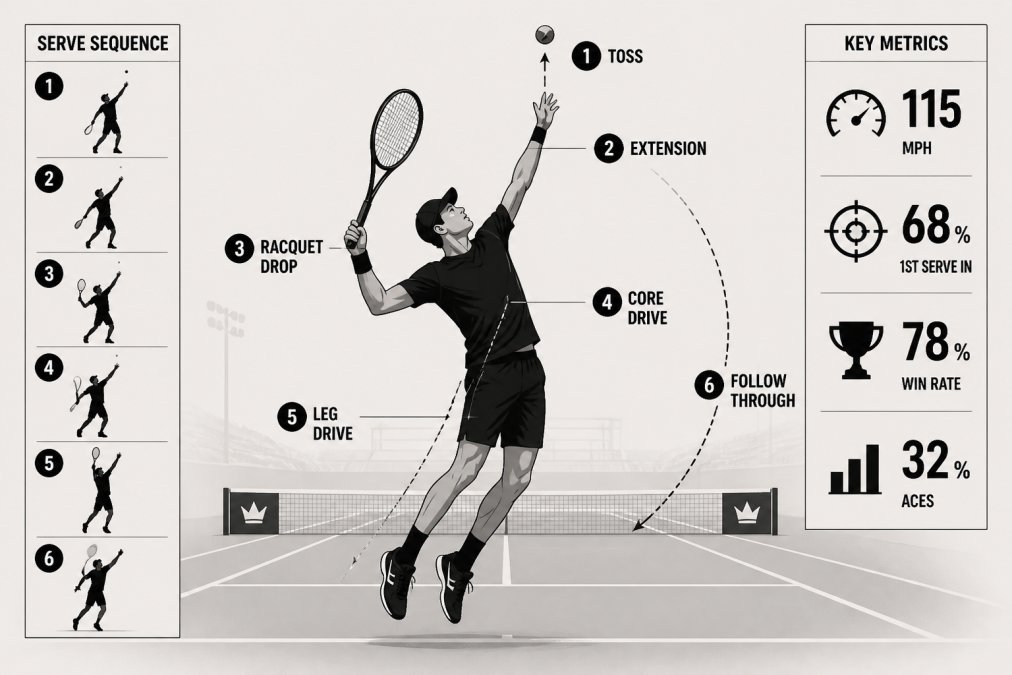
Serve-specific drills also address consistency. Most competitive players can hit one great serve, then inconsistency creeps in. The difference between a top-50 player and a top-500 player often comes down to serve consistency. Drills that build serve repetition at match intensity develop the neural pathways required for reliable execution under pressure.
The serve is where matches are won or lost. Competitive players who invest in serve-specific training that combines technical precision, tactical variety, and pressure execution see immediate match improvements because they’re eliminating unforced errors on their own shot.
Court Coverage and Footwork Intensity Drills
Court coverage and footwork separate competitive players from everyone else. Two players with identical stroke technique can have completely different match results based on court positioning and movement efficiency. Footwork intensity drills build the explosive movement and court awareness that allows competitive players to reach balls others can’t and position themselves for offensive shots.
Footwork drills for competitive play aren’t about running, they’re about explosive positioning, directional changes, and court geometry. A competitive player must move to the ball, set up properly, and recover to court position faster than opponents expect.
The most effective footwork drills combine movement with shot execution. A player sprints to a corner, sets up properly, hits a specific shot under time pressure, and recovers. This replicates match demands. Intensity matters enormously, casual footwork drills produce casual footwork. Competitive players need drills where movement intensity matches match demands, with shorter rest periods, higher ball velocity, and situations where the player is slightly off-balance, exactly like match conditions.
Improve Tennis Match Mental Toughness Under Pressure
Mental toughness separates competitive players who win tournaments from those who lose in crucial moments. Technical skill matters, but mental conditioning determines whether that skill shows up when matches are tight. Competitive players lose matches they should win because of mental breakdowns, not stroke failures.
Improving mental toughness requires systematic training. Mental conditioning must be built through deliberate practice where pressure situations are introduced progressively, the player learns to manage emotions, and confidence builds through repeated success under challenging conditions.
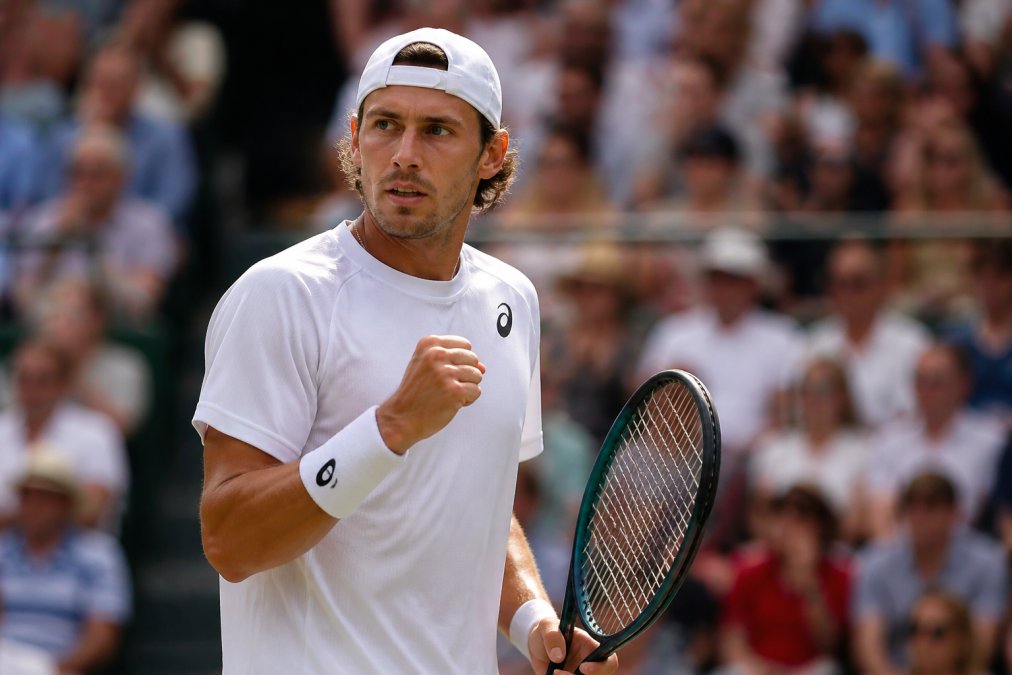
Mental toughness in competitive tennis involves emotional regulation under pressure, tactical clarity when stressed, confidence in crucial moments, and resilience after setbacks. Elite coaching addresses each component through specific training methods. A player might practice match scenarios where they’re down 0-40 and must hold serve. Another drill focuses on executing the right shot when frustrated. Another builds confidence through progressive success in competitive situations.
The most effective mental training happens during competitive match play. A coach structures practice matches where pressure escalates, consequences matter, and the player faces situations they’ll encounter in real tournaments. This builds mental patterns that transfer directly to actual competition.
Mental breakdowns in matches are almost always preceded by technical breakdowns. A player loses confidence after a few errors, then tries too hard, then loses more points. Prevention is building enough technical confidence through high-quality training that mental pressure doesn’t trigger technical collapse.
Tennis Match Strategy for Competitive Players
Tennis match strategy for competitive players is fundamentally different from general tennis strategy. Competitive players face opponents with specific strengths, weaknesses, and tendencies. Strategy means exploiting those specific weaknesses while protecting against their strengths.
Effective match strategy starts with opponent analysis. What’s their forehand weakness? Do they struggle with high balls or low balls? Can they move quickly to the net? Do they have a vulnerable second serve? Which patterns expose their positioning? Competitive players who enter matches with specific tactical plans outperform those who just try to play well.
Strategy also means adjusting during the match. If the initial plan isn’t working, a competitive player must recognize this quickly and shift tactics. This requires tactical awareness, confidence in alternative approaches, and the ability to execute new patterns under pressure.
Rally Management and Shot Selection
Rally management is the ability to control match flow through intelligent shot selection. Most competitive players focus on hitting winners. The better approach is positioning opponents, limiting their options, and eventually forcing errors or weak returns.
Effective rally management means understanding court geometry, opponent positioning, and shot probabilities. A competitive player might hit a cross-court shot not because it’s a winner, but because it forces the opponent into a specific position where the next shot becomes vulnerable.
Shot selection under pressure is where many competitive players fail. When the match is tight, players often try to hit bigger shots instead of executing their game plan. Elite coaching builds shot selection discipline, the ability to execute the right shot even when pressure suggests hitting something bolder.
Tactical Adjustments During Tournament Play
Tournament play introduces variables that practice doesn’t replicate. Court surfaces vary. Weather changes. Opponents play differently than expected. Fatigue accumulates across multiple matches. Competitive players must adjust tactics based on these real-world factors.
Effective tactical adjustment requires pattern recognition. A coach teaches players to recognize when tactics aren’t working and what adjustments might help. The best competitive players develop tactical flexibility, they have a primary game plan but are prepared to shift serve placement, rally patterns, net approach, or defensive positioning if circumstances demand it.
Periodization and Performance Analysis for Long-Term Competitive Success
Periodization is the systematic organization of training into phases, each with specific objectives. A competitive player who trains the same way year-round won’t achieve peak performance. Periodization typically includes off-season training (building fitness and technical foundation), pre-season training (sport-specific conditioning and tactical preparation), in-season training (maintaining performance while competing), and recovery phases (rebuilding and preventing injury).
Performance analysis provides the data that drives intelligent training decisions. Instead of guessing what needs improvement, competitive players analyze match data to identify specific weaknesses. This might include serve statistics, unforced error patterns, break point conversion rates, or specific shot vulnerabilities. Data-driven coaching targets these specific areas.
The most effective competitive programs combine periodization with performance analysis. A player’s training phases are informed by performance data showing what actually needs improvement. This prevents wasted training time on areas that aren’t limiting match results.
Periodization and performance analysis separate competitive players who improve consistently from those who plateau. Without these systems, training becomes random and results plateau quickly. With them, competitive players continue improving even after reaching high competitive levels.
Certified Coaching vs. Self-Directed Training
Certified coaching for competitive tennis differs fundamentally from self-directed training. A certified coach brings systematic methodology, objective feedback, and tactical expertise that self-directed players cannot replicate alone.
Self-directed training has limitations. A player can identify that their serve needs work, but without objective feedback, they can’t assess whether changes are actually improving serve consistency or just feeling different. A player might practice the wrong pattern repeatedly, reinforcing poor technique. Self-directed players often miss tactical opportunities because they lack outside perspective on their game.
Certified coaches working with competitive players provide several advantages. They identify technical issues invisible to the player. They design training specifically targeting competitive demands. They provide accountability and structured progression. They adjust training based on performance data and match results. They help players navigate mental challenges that emerge in competitive play.
The best certified coaches have specific credentials and experience with competitive players. USPTA and PTR certifications represent professional standards for tennis coaching. Coaches working with competitive players should understand high-performance training methodology, periodization, tactical development, and mental conditioning.
For most competitive players, the combination of certified coaching and self-directed training works best. A coach provides systematic guidance, objective feedback, and expertise. The player takes responsibility for consistent execution between sessions, mental preparation, and fitness maintenance. This partnership accelerates improvement more than either approach alone.
Crunch Time Coaching provides world-class instruction combining step-by-step daily lessons, specialized challenge-based curriculum that builds progressive skill development, and access to in-person training camps where players receive hands-on coaching. This combination of online structured training and personalized coaching creates the environment where competitive players actually improve.
Competitive tennis demands a completely different coaching approach than recreational play. Technical skills matter, but they’re just the foundation. Mental toughness, tactical awareness, periodized training, and performance analysis separate players who reach their competitive potential from those who plateau.
If you’re a competitive player stuck on a performance plateau, the solution isn’t working harder, it’s working smarter with a coach who understands high-performance tennis training. Crunch Time Coaching provides world-class instruction combining step-by-step daily lessons, specialized challenge-based curriculum designed to transform specific skills like your serve and footwork, and access to in-person training camps where you receive personalized feedback on your actual technique and tactical patterns. Reserve Your Spot Today to start the training system that competitive players use to reach a higher level of play.
Frequently Asked Questions
What should I look for in a tennis coach for competitive play?
A qualified coach for competitive tennis should hold certification from USPTA or PTR and demonstrate experience with match-play preparation and tactical development. Look for someone who uses performance analysis tools, understands periodization principles, and can address both technical proficiency and mental conditioning. Coaches who specialize in competitive players focus on game-based learning and tournament readiness rather than recreational skill-building.
How does coaching for competitive players differ from recreational lessons?
Competitive coaching emphasizes match strategy, tactical awareness, and high-intensity drills designed for tournament performance. Recreational lessons focus on basic technique and enjoyment. Competitive coaches analyze your specific game style, identify weaknesses under pressure, and develop periodized training plans that build toward peak performance at targeted tournaments. Mental conditioning and rally management are central to competitive coaching.
How often should competitive tennis players train to see measurable improvement?
Most competitive players benefit from 4-6 training sessions per week, combining technical drills, match play, and recovery protocols. Frequency depends on your current level, tournament schedule, and goals. Periodization divides your training into phases: off-season building (higher volume), pre-competition sharpening (match-specific intensity), and competition phases (maintenance and tactical focus). Consistency matters more than sporadic high-volume training.
Can online coaching actually improve my serve and footwork if the coach can't see me in person?
Yes, when structured correctly. Video analysis of your technique, detailed feedback on biomechanics, and step-by-step daily instruction can identify and correct swing mechanics and footwork patterns. Many competitive players use video submission for personalized feedback combined with live coaching sessions. The key is consistent practice of prescribed drills and willingness to implement corrections. In-person training camps complement online coaching by allowing hands-on adjustment and real-time observation.
This article was written using GrandRanker