
Table of Contents
- Why Private Tennis Lessons Cost So Much
- Benefits of Group Tennis Clinics vs. Private Instruction
- Online Tennis Coaching Platforms That Deliver Results
- Local Coaching Marketplaces for Flexible, Affordable Options
- How to Practice Tennis Alone and Stay Consistent
- Comparison Table: Cost and Commitment Across Alternatives
- Which Alternative Works Best for Your Game and Budget
- Frequently Asked Questions
Last Updated: September 18, 2026
Why Private Tennis Lessons Cost So Much
Private tennis coaching carries a premium price tag because it demands one-on-one attention from a qualified instructor. You’re paying for personalized feedback, real-time corrections, and a lesson plan built specifically around your weaknesses. The instructor blocks off court time exclusively for you, travels to your location or facility, and tailors every drill to your skill level and goals.
This model works beautifully if you have the budget. A professional coach observes your serve mechanics, footwork patterns, and tactical decisions in real time, then adjusts instruction on the fly. That level of customization is hard to replicate any other way.
But here’s the reality: most players don’t need that level of personalization for every single session. Many hit a plateau where they’re paying premium rates for incremental improvements. That’s where affordable tennis lessons and structured alternatives become genuinely valuable.
Private lessons excel at diagnosing specific technical flaws, but they’re not the only path to improvement. Strategic alternatives can accelerate your game at a fraction of the cost.
Benefits of Group Tennis Clinics vs. Private Instruction
Group clinics deliver professional-grade coaching at a dramatically lower hourly rate. You’re splitting the instructor’s time and court rental among multiple players, which cuts costs significantly. But the real advantage goes deeper than price.
In a clinic, you learn from watching other players make mistakes and execute shots correctly. You hit against different opponents with varying styles, which sharpens your adaptability. The structured format keeps you accountable, you show up at a set time with other committed players, which builds consistency that solo practice often lacks.
The trade-off is real: group settings mean less personalized feedback. The coach can’t spend 30 minutes analyzing your specific serve issues when they’re managing six players. But for many competitive players, this limitation is worth the savings. You still get professional eyes on your game, still learn proper technique, and still improve faster than you would alone.
Group clinics work best when you already understand your major weaknesses. If you know your backhand footwork is broken, a clinic will help you fix it. If you’re unsure what’s actually holding you back, a private lesson or coaching platform with video analysis might be worth the investment first.
Online Tennis Coaching Platforms That Deliver Results
Digital coaching has evolved dramatically. The best platforms combine video instruction with structured curriculum and challenge-based learning that keeps you engaged between sessions.
Crunch Time Coaching
Crunch Time Coaching delivers world-class, step-by-step daily instruction designed to transform your game. The platform focuses on mastering specific skills like your serve and footwork through specialized challenge-based curriculum. You get access to on-demand video lessons from a ‘Totally Obsessed’ coach who breaks down mechanics into digestible daily modules.
The real strength here is consistency. You practice the same drills daily, building muscle memory through repetition. The challenge-based structure keeps you accountable and progressing toward measurable milestones. Unlike watching random YouTube videos, you’re following a strategic progression designed by someone who understands competitive tennis fundamentals.
Crunch Time Coaching also offers exclusive in-person training camps for players ready to deepen their game with hands-on sessions. This hybrid model gives you the affordability of online coaching combined with the personalized feedback of live instruction.
Best for: Competitive players who want structured self-study with the option for in-person training camps. Works especially well if you’re disciplined enough to follow a curriculum without real-time feedback. Developing this level of self-reliance often serves as a foundational skill for other beginner sports training, which can be explored through various pathways for those seeking to diversify their athletic development.
Pros:
- Available on-demand for consistent daily practice
- Specialized focus on high-impact skills like serve mechanics and footwork
- Challenge-based curriculum keeps you engaged and progressing
- In-person training camp opportunities for deeper coaching
Cons:
- Lacks real-time, personalized feedback on your individual strokes
- Requires self-discipline to stay consistent without external accountability
Van Der Meer Tennis Clinics
Van Der Meer operates as both a traditional academy and a platform offering intensive group clinics. Their weekend clinic formats provide professional coaching staff with academy experience. The structured curriculum emphasizes technical drills and game-based learning, with options for various skill levels.
Best for: Players looking for high-quality instruction in a condensed, affordable group format.
Pros:
- Significantly lower cost per hour than private coaching
- Access to professional-grade training methods
- Structured curriculum with clear progression
Cons:
- Requires travel to specific clinic locations
- Less personalized feedback than one-on-one instruction
IMG Academy Tennis Camps
Best for: Serious players seeking an intensive, short-term boost to their game before tournament season or major competition.
Pros:
- Elite-level coaching and facilities
- Immersive learning experience with full-time focus
- Comprehensive technical and tactical development
Cons:
- High upfront cost for camp attendance
- Requires time commitment away from home
Local Coaching Marketplaces for Flexible, Affordable Options
Coaching marketplaces connect you directly with local instructors, letting you filter by price, experience, and teaching style. This approach bypasses the overhead of traditional clubs and academies.
Wyzant
Best for: Budget-conscious players seeking extreme pricing flexibility with no long-term financial commitments.
Pros:
- Avoids long-term financial commitments
- High degree of pricing transparency and choice
- Direct communication with instructors to negotiate rates
Cons:
- Pricing varies significantly based on individual instructor rates
- Quality inconsistency across different coaches
PlayYourCourt
Best for: Players seeking local, vetted instruction without the overhead of a private club membership.
Pros:
- Easier to find affordable group options
- Vetted instructors in major metropolitan areas
- Mobile-friendly booking and flexible scheduling
Cons:
- Availability depends on local coach density
- Quality varies by individual instructor
MyTennisLessons
Best for: Players who want to compare multiple local coaches to find the best value.
Pros:
- Easy comparison of hourly rates
- Wide variety of coaching styles available
- Transparent pricing and student testimonials
Cons:
- Quality of instruction varies by individual coach
- No vetting process beyond student reviews
How to Practice Tennis Alone and Stay Consistent
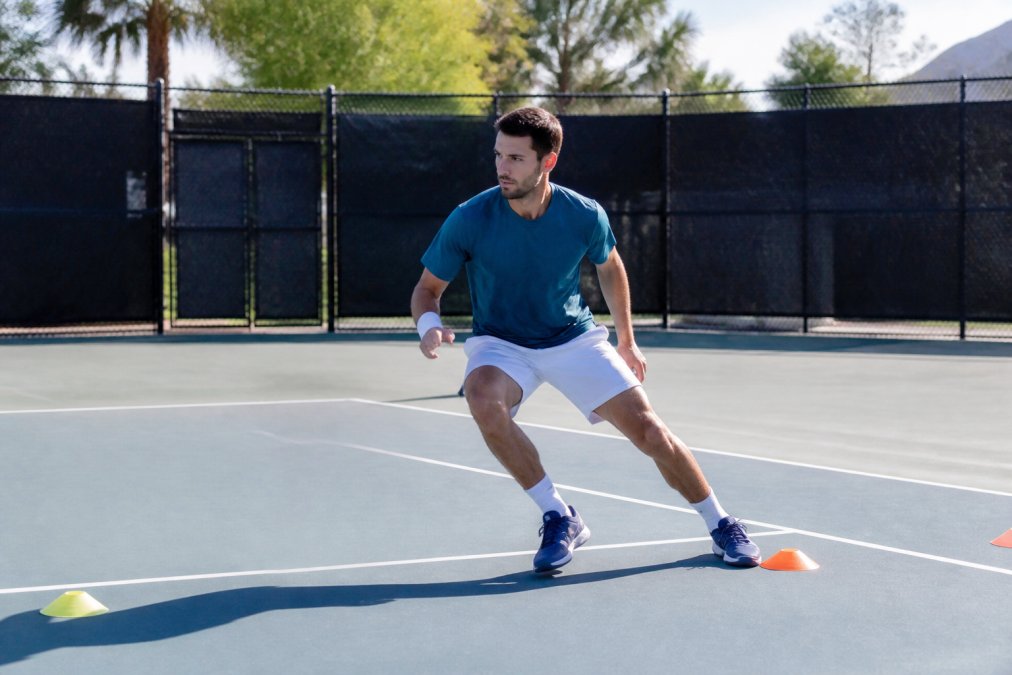
Solo practice is where most improvement actually happens. The structured drills you execute alone, hundreds of serves, footwork patterns, and court positioning exercises, build the muscle memory that translates to match play.
The challenge is staying consistent without external accountability. Group clinics and coaching platforms solve this by providing structure. But if you’re disciplined, self-directed practice can be remarkably effective.
Start with specific skill targets. Don’t just hit balls aimlessly for an hour. Instead, commit to 20 serves focusing on one mechanical element, maybe your toss consistency or your follow-through. Then move to footwork drills: side-to-side movement, transition steps, recovery positioning. Finish with game-realistic scenarios where you simulate match situations.
Use public court access strategically. Many communities offer affordable or free public courts. Practice during off-peak hours when you have space to work without interference.
The biggest mistake in solo practice is practicing the wrong things. If your backhand footwork is broken, hitting 100 backhands with poor footwork just reinforces bad habits. Identify what’s actually limiting your game, then design drills that target that specific weakness.
Track your progress. Whether it’s keeping a simple notebook of what you worked on or recording video to review your mechanics, measurement keeps you accountable. You’ll notice improvements faster when you’re intentionally monitoring them.
Comparison Table: Cost and Commitment Across Alternatives
| Option | Format | Typical Cost | Time Commitment | Best For |
|---|---|---|---|---|
| Private Lessons | One-on-one | Premium | Flexible scheduling | Specific technical diagnosis |
| Group Clinics | Multiple players | Moderate | Set times, weekend | Professional instruction on budget |
| Online Platforms | Self-paced video | Varies | Daily practice | Structured skill development |
| Coaching Marketplaces | Local instructors | Budget to moderate | Flexible | Price comparison and local access |
| Training Camps | Intensive immersion | High upfront | 1-2 weeks | Rapid improvement before competition |
| Solo Practice | Self-directed | Minimal | Flexible | Consistency and muscle memory |
Which Alternative Works Best for Your Game and Budget
Your choice depends on three factors: your current skill level, your specific weaknesses, and how much you’re willing to invest.
Competitive players aged 40+ returning to serious play: Start with group clinics and Crunch Time Coaching. You need structured progression and professional feedback without the commitment of expensive private coaching. The combination gives you accountability and expert guidance at a sustainable cost.
Frequently Asked Questions
Are online tennis coaching platforms as effective as in-person lessons?
Online platforms excel at delivering structured, repeatable instruction for technique and tactical awareness. Platforms like Crunch Time Coaching provide daily video lessons that let you drill specific mechanics at your own pace. The trade-off: you don’t get real-time feedback on your individual strokes or live correction of footwork errors. Most effective when combined with occasional in-person assessment or group clinics where a coach can watch your swing and adjust your approach.
What are the best ways to practice tennis solo without a coach?
Solo practice works best with structure. Focus on footwork drills (side-to-side movement, split-step timing), serve mechanics (shadow serves, basket drills), and hitting against a wall or ball machine to build consistency. Use video to record yourself and compare your stroke to instructional content. Join public court sessions or hitting partner networks to get match-play experience. Solo drilling builds fundamentals; match play with others reveals weaknesses that drills alone won’t expose.
How much should I expect to spend on affordable tennis lessons or clinics?
Group clinics can be significantly less than private lessons. Local coaching marketplaces vary widely depending on instructor experience and location. Online subscription platforms like Crunch Time Coaching offer structured daily instruction at a fraction of private coaching rates. Budget-conscious players often combine affordable group clinics with solo practice and online instruction to maximize value.
Can I actually improve my serve and footwork without a private coach?
Yes, but progression is slower without personalized feedback. Group clinics and online coaching platforms teach the correct mechanics and drills. The key is consistent, deliberate practice, not just hitting balls. Video analysis tools and peer feedback from hitting partners help identify flaws. Many competitive players use group clinics quarterly for form checks, supplement with online instruction, and practice solo between sessions. This hybrid approach delivers results at a fraction of private lesson costs.