
Table of Contents
- Why Players Are Seeking Fuzzy Yellow Balls Alternative Options
- Top Fuzzy Yellow Balls Alternative Options Compared
- Crunch Time Coaching Reviews: What Competitive Players Say
- Personalized Tennis Training Programs vs. Pre-Recorded Libraries
- Tennis Footwork Drills for Consistency: Building a Foundation
- Subscription Value and Pricing: What to Expect
- How to Choose the Right Platform for Your Game
- Frequently Asked Questions
Last Updated: September 16, 2026
Why Players Are Seeking Fuzzy Yellow Balls Alternative Options
Fuzzy Yellow Balls built one of the first serious video libraries for tennis instruction, and for a long stretch it was the default answer for players who wanted free stroke breakdowns online. That era has ended. The site’s structured lesson flow has thinned out, its free content has aged, and players who once relied on it now find themselves hunting for something with more structure and more accountability.
That hunt is the subject of this guide from Crunch Time Coaching. The fuzzy yellow balls problem is not that the old material was bad. It is that a static video archive cannot diagnose your serve toss, correct your split step, or tell you why you keep losing tiebreakers. Modern alternatives split into three camps: structured challenge-based coaching, biomechanics-first instruction, and free data-driven reference material. Each suits a different type of player.
Below, we compare the leading options, break down what each one actually delivers, and show you how to pick the one that fits your game and your budget.
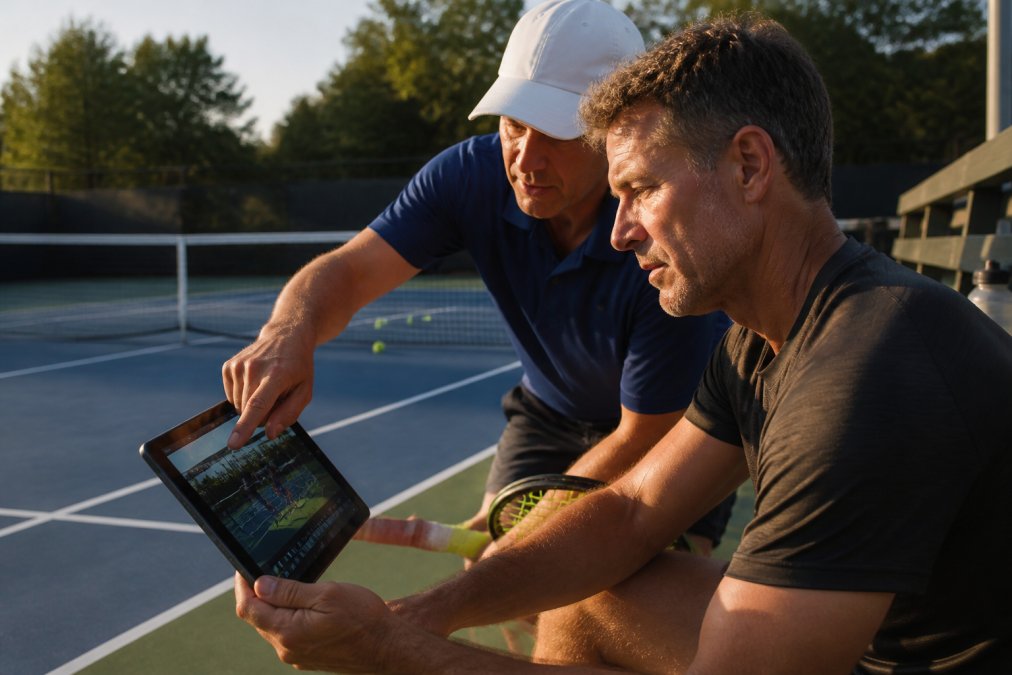
Top Fuzzy Yellow Balls Alternative Options Compared
The best Fuzzy Yellow Balls alternative options in 2026 fall into three categories: structured challenge-based curriculum, biomechanics-focused power development, and free data-driven technical reference.
| Platform | Format | Best For | Cost Model |
|---|---|---|---|
| Crunch Time Coaching | Daily video lessons plus in-person camps | Competitive players wanting structure and accountability | Free YouTube content; paid courses and camps |
| Top Speed Tennis | Biomechanics and physics courses | Players chasing more power and cleaner mechanics | Free content; paid courses |
| Tennis Warehouse University | Articles, calculators, equipment research | Analytical players who want the “why” | Free |
The distinction matters more than the names. A player rebuilding a serve after a long layoff needs a sequence to follow. A player who already has solid mechanics but wants more racket head speed needs biomechanics. A player who wants to understand string tension and swing weight needs data.
Crunch Time Coaching: Structured, Challenge-Based Curriculum
Crunch Time Coaching is a strong pick for competitive players who need a daily plan rather than a video archive to browse. The platform is built around step-by-step daily instruction from a coach who describes himself as “Totally Obsessed,” and the curriculum is organized as challenges rather than a flat library. You work a specific skill, measure it, and move on.
The standout feature is the blend of remote and hands-on work. Daily video lessons handle the technical and tactical material, while exclusive in-person training camps give you the live feedback that no screen can fully replace. For adults over 40 returning to serious play, that combination answers the most common objection about online coaching: how anyone can see your footwork through a camera.
What it does well:
- Serve mechanics broken into a transformation sequence
- Footwork and consistency work with a clear progression
- Challenge-based curriculum that forces skill acquisition instead of passive watching
- In-person camps for players who want hands-on correction
Where it falls short: the curriculum is intense. Recreational players who want casual tips will find the pace demanding, and the challenge structure assumes you are willing to practice between sessions.
Competitive league and tournament players who want daily structure, measurable skill progression, and access to in-person camps.
Top Speed Tennis: Biomechanics and Power Development
Top Speed Tennis approaches instruction through physics. Courses center on the kinetic chain, and the platform uses detailed video analysis of professional technique to show how power actually transfers from the ground through the hips, torso, and arm into the ball. If your forehand feels mushy and you cannot explain why, this is the diagnostic approach.
The tradeoff is accessibility. The material assumes you want to understand mechanics at a technical level, and beginners looking for simple fixes will find it dense. Players who already have sound strokes and want to add pace get the most from it.

Tennis Warehouse University: Free, Data-Driven Technical Analysis
Tennis Warehouse University is the reference desk of online tennis instruction. It publishes in-depth articles on stroke mechanics and court geometry, maintains interactive calculators for swing weight and court physics, and backs its equipment guidance with measurement rather than opinion. Everything on the site is free.
What it lacks is coaching. There is no daily plan, no progression, and no feedback loop. You arrive with a question, get a thorough answer, and leave. For a player who wants to understand why a heavier frame changes their swing, that is enough.
Crunch Time Coaching Reviews: What Competitive Players Say
Crunch Time Coaching reviews from competitive players tend to focus on three things: the specificity of the daily lessons, the intensity of the challenge format, and the value of the in-person camps.
Personalized Tennis Training Programs vs. Pre-Recorded Libraries
Personalized tennis training programs adapt to your specific weaknesses, schedule, and competitive goals, while pre-recorded libraries deliver the same content to every subscriber regardless of level. The gap between them is the difference between a plan and a catalog.
The most common mistake with any online platform is treating it as entertainment. Players who watch lessons without practicing between sessions see almost no improvement, then conclude the platform does not work. Schedule practice time before you schedule viewing time.
Tennis Footwork Drills for Consistency: Building a Foundation
Tennis footwork drills for consistency build the base that every stroke depends on. Without correct movement patterns, even technically sound strokes fall apart under match pressure, because you arrive late and compensate with your arm.
Training drills should progress in three stages:
- Shadow work with no ball, focusing purely on movement pattern and recovery position
- Fed drills where a partner or machine sends balls to specific zones
- Live ball patterns where you track court positioning during actual points
Subscription Value and Pricing: What to Expect
Pricing across online tennis instruction varies widely by format, and the honest answer is that you should check each platform’s site for current rates. Crunch Time Coaching does not publish fixed pricing here; costs depend on the course or camp you select, and in-person camps carry separate fees from digital access.
- Does the platform have a free tier? Crunch Time Coaching, Top Speed Tennis, and Tennis Warehouse University all offer free content, which lets you test the teaching style before paying.
- What does the paid tier add? Structure, progression, and feedback are what you are buying. If the paid tier is just more videos in the same format, the free tier is probably enough.
- Is there a live component? In-person camps and personalized feedback justify a higher cost than a video library.
How to Choose the Right Platform for Your Game
Choosing the right platform comes down to matching the format to your actual problem. Players who need accountability and a sequence should choose challenge-based coaching. Players who need more power and want to understand mechanics should choose biomechanics instruction. Players who want reference material and equipment analysis should use the free data-driven resources.
A simple decision framework:
- If you are returning after years away and need a rebuild: start with structured daily lessons, because you need a sequence, not a catalog.
- If your strokes are solid but your results are not: look at footwork, court positioning, and match strategy content.
- If you lose tiebreakers and tight sets: prioritize platforms that address the mental side alongside technical work.
- If you want to understand equipment and mechanics: the free analytical resources will answer more of your questions than any paid course.
- If you need hands-on correction: only consider options with in-person training.
Test any platform’s free tier for two weeks before paying. Watch three lessons and complete one practice session based on each. If the teaching style does not click by the third lesson, it will not click on the paid tier either.
Frequently Asked Questions
What are the best online tennis coaching platforms for adults?
The best platform depends on your learning style. Crunch Time Coaching offers structured, challenge-based curriculum with in-person camp options. Top Speed Tennis focuses on biomechanics for power. Tennis Warehouse University provides free, data-driven technical articles. For competitive adults who want daily step-by-step instruction, a platform with personalized feedback and a clear progression path tends to produce the fastest improvement.
How does Crunch Time Coaching compare to traditional video libraries?
Traditional video libraries give you a catalog to browse. Crunch Time Coaching provides a structured curriculum with daily lessons and challenge-based progression. The key difference is accountability and sequence: instead of choosing random videos, you follow a path designed to build skills in order. In-person training camps add hands-on feedback that pre-recorded libraries cannot match.
Is a personalized tennis training program better than a pre-recorded course?
Personalized programs adapt to your specific weaknesses, while pre-recorded courses deliver the same content to everyone. If your serve has been inconsistent for months or your footwork breaks down under pressure, a program that diagnoses your issues and adjusts drills accordingly will save time. Pre-recorded courses work well for learning new strokes from scratch or as a supplement to live coaching.
What should I look for in a tennis instruction subscription?
Look for four things: a clear curriculum that progresses from fundamentals to advanced skills, video analysis or feedback mechanisms so you know what to fix, mobile accessibility so you can watch drills courtside, and a focus on match strategy alongside stroke mechanics. Pricing matters, but a platform that keeps you engaged and improving is worth more than a cheaper option you abandon after two weeks.
Are there free alternatives to paid tennis training websites?
Yes. Tennis Warehouse University offers free technical articles and data analysis tools. YouTube has extensive free instruction from coaches covering stroke mechanics, footwork patterns, and match strategy. The trade-off is structure: free content rarely provides a sequenced curriculum, personalized feedback, or accountability. Many competitive players use free resources for reference and pay for a structured program when they need to break through a plateau.