
Last Updated: October 27, 2026
Quick Summary
Neither format wins outright, because the research comparing online tennis coaching with in-person lessons is thin. Online tennis coaching works well for video-based technique review, match analysis and flexible scheduling, while in-person lessons deliver hands-on correction and immediate feedback.
- Online tennis coaching offers flexible timing, easy video review, no travel, and access to coaches outside your area.
- In-person lessons provide hands-on correction, immediate feedback, and stronger accountability.
- Online lessons depend heavily on video quality, so film with a stable mount and even lighting.
- Record short clips of one stroke over three to five reps, filmed from roughly waist-to-chest height.
- Start online for video-based technique work, and book in-person sessions when you need hands-on mechanics correction.
Table of Contents
- Online vs In-Person Tennis Coaching: What the Evidence Shows
- How Online Tennis Lessons Work: Video Analysis and Live Feedback
- What In-Person Coaching Does Better: Hands-On Correction and Live Feedback
- Tennis Serve Coaching: Which Format Fixes Mechanics Faster
- How Often You Need Lessons: Tennis Lesson Frequency and Practice Consistency
- Pros and Cons: Choosing Between Online Tennis Lessons and In-Person Coaching
- Next Step: Booking Your First Lesson Format With Crunch Time Coaching
- Frequently Asked Questions
Online tennis coaching and in-person lessons are the two formats most players weigh before booking. Crunch Time Coaching offers online instruction and in-person training camps. The honest answer is that the research on this question is thin.
Online vs In-Person Tennis Coaching: What the Evidence Shows
The clearest evidence comes from a Victoria University study on applying the expert-novice paradigm in tennis coaching. It developed a video-based test to measure how well an online tennis course worked. That is useful, but it measures one online course, not online coaching against face-to-face instruction.
We recommend judging each format on what it does well, not on a blanket verdict.
How Online Tennis Lessons Work: Video Analysis and Live Feedback
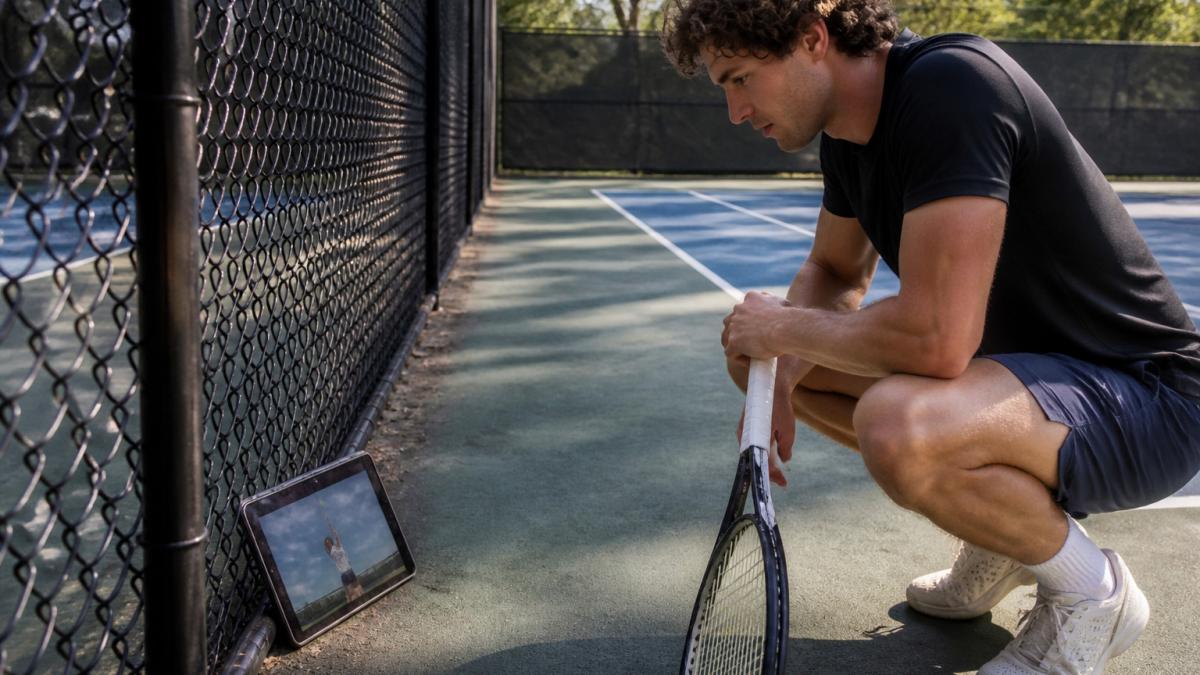
The practical limit is camera angle and lighting. A poorly placed phone can hide the very motion a coach needs to see. Many players also struggle to judge their own footage, which is why remote stroke analysis is worth understanding before you commit.
What In-Person Coaching Does Better: Hands-On Correction and Live Feedback
In-person lessons do have limits. Court access, scheduling, and travel all add friction. If you have no court nearby, the advantage shrinks quickly.
Tennis Serve Coaching: Which Format Fixes Mechanics Faster
If your serve has resisted change for months, a structured plan usually beats random tinkering. This serve consistency guide lays out a step-by-step route you can start this week.
How Often You Need Lessons: Tennis Lesson Frequency and Practice Consistency
- **
- **
- **
- **
Pros and Cons: Choosing Between Online Tennis Lessons and In-Person Coaching
Online tennis lessons
- Pros: Flexible timing, easy video review, no travel, access to coaches outside your area, and the ability to rewatch feedback.
- Cons: Limited physical correction, feedback can lag, and results depend heavily on video quality and the player’s ability to self-direct practice.
- Practical costs: Lesson fees vary widely by coach and program; the hidden costs are a phone or camera with decent frame rate, adequate lighting, and a stable connection for live sessions. Travel and court fees are often lower because you can film during a practice you were already doing.
- Technology needed: A smartphone or camera that shoots at least 60 frames per second for stroke analysis, a tripod or stable mount, and a way to share clips (cloud link or messaging app). For live remote sessions, a stable connection and a platform the coach uses are required.
In-person coaching
- Pros: Hands-on correction, immediate feedback, stronger accountability, and live ball-striking that remote formats cannot replicate.
- Cons: Court access and scheduling constraints, travel time, and usually higher cost per session once court fees and travel are included.
- Practical costs:
| Factor | Online | In-Person |
|---|---|---|
| Physical correction | Limited | Strong |
| Feedback speed | Often delayed | Immediate |
| Scheduling flexibility | High | Lower |
| Travel and court friction | Low | Higher |
| Technology requirement | Camera, mount, connection | None beyond normal gear |
| Best for | Video-based technique work, match review, tactical analysis | Hands-on mechanics, movement, live ball-striking |
How to record and share useful tennis video
- Camera placement: Place the camera at roughly waist-to-chest height, perpendicular to the stroke you want reviewed (side-on for serve and groundstrokes, behind for match play). A poorly placed phone can hide the very motion a coach needs to see.
- Lighting: Film in even light, ideally with the sun behind the camera rather than behind the player. Backlit footage hides contact point and racket path.
- Clip length: Send short clips, one stroke, three to five reps, rather than a long unedited session. Coaches can review more precisely and you get more specific feedback.
- What to include: A front-on and side-on view of the same stroke if possible, plus a note on what you feel is going wrong. Context helps the coach separate cause from symptom.
Next Step: Booking Your First Lesson Format With Crunch Time Coaching
Choosing a format is easier once you know your problem. If your technique needs video review and steady practice, start online. If you need hands-on correction, book an in-person session first. Crunch Time Coaching offers both online instruction and in-person training camps, so you can match the format to your goal. For current pricing, contact Crunch Time Coaching directly, since costs depend on the program, dates, and delivery. Before committing, read how to choose a tennis instruction subscription to compare what each option includes.
Frequently Asked Questions
Is online tennis coaching effective?
Online tennis coaching can be effective, especially for technical and tactical learning where video analysis helps. The strongest published research available here is limited: a 2021 Victoria University study developed a video-based test for an online tennis course, but it did not compare outcomes directly with in-person coaching. Results depend heavily on the player’s level, the skill being trained, and how consistently the student practices between sessions.
Is in-person tennis coaching better than online coaching?
In-person coaching usually has the edge for physical correction, such as adjusting footwork, balance, and ball contact in real time, because a coach can physically observe and adjust the body. Online coaching often works well for stroke review, tactics, and mental preparation. Many players get the best results by combining both formats rather than choosing one exclusively.
Can a coach correct your tennis technique through video?
Yes, many technique issues can be identified through video, particularly grip, toss, racket path, and footwork patterns. Record your stroke from a fixed angle at waist height, ideally from the side and behind, and share several clips. Video feedback works best when the coach can compare clips over time, since a single swing can be misleading.
How often should you take tennis lessons to improve?
Most players improve faster with one focused lesson per week plus regular practice between sessions, rather than occasional long sessions. Lesson frequency matters less than practice consistency, so a plan that includes drills you repeat during the week usually produces more progress. Competitive players preparing for tournaments may benefit from more frequent work during a set training block.
