
Table of Contents
- Why Competitive Players Seek Rick Macci Alternatives
- Online Tennis Coaching for Competitive Players
- Tennis Academy vs Private Coaching: Which Fits Your Goals
- How to Choose a Tennis Coach for USTA Tournaments
- PlayYourCourt: Local Coaches and Community-Based Training
- Key Differences: Specialization vs. Generalization in Coaching
- Making Your Decision: Matching Your Needs to the Right Coaching Model
Last Updated: August 28, 2026
Why Competitive Players Seek Rick Macci Alternatives
Finding the right coaching fit is one of the most consequential decisions a competitive tennis player makes. Rick Macci has built a legendary reputation for developing elite junior players, but his academy-based model, geographic limitations, and focus on junior development mean that many competitive adult players, especially those balancing careers, families, and tournament schedules, need a different approach.
Today’s competitive players have access to world-class coaching through multiple delivery models: personalized video analysis platforms, streaming libraries from 60+ professional coaches, hybrid online-and-in-person academies, and community-based coaching marketplaces (usta.com). The real question isn’t whether alternatives exist, they do, but which model aligns with your specific goals, timeline, and constraints. A 47-year-old returning to competitive play has entirely different needs than a 25-year-old trying to break into professional circuits (peer-reviewed research).
This guide from Crunch Time Coaching breaks down the major Rick Macci alternatives for competitive players and shows you how to match your situation to the coaching model that will move the needle for your game.
Online Tennis Coaching for Competitive Players
Modern video analysis platforms and structured digital coaching programs deliver personalized technical feedback, mental performance training, and biomechanical refinement without requiring relocation or attendance at traditional academies.
Crunch Time Coaching: Personalized Video Analysis and Mental Performance
Crunch Time Coaching combines deep technical refinement through video analysis with explicit mental performance training, a gap most platforms miss. You’ll learn footwork patterns and serve mechanics, but you’ll also systematize how you handle pressure in tiebreaks and recover mentally after losing sets you should have won.
The platform delivers world-class coaching through step-by-step daily instruction. You can focus on mastering your serve, sharpening footwork for consistency, or gaining insights through specialized challenge-based curriculum. Rather than generic video libraries, you get a coherent progression that builds specific skills over time.
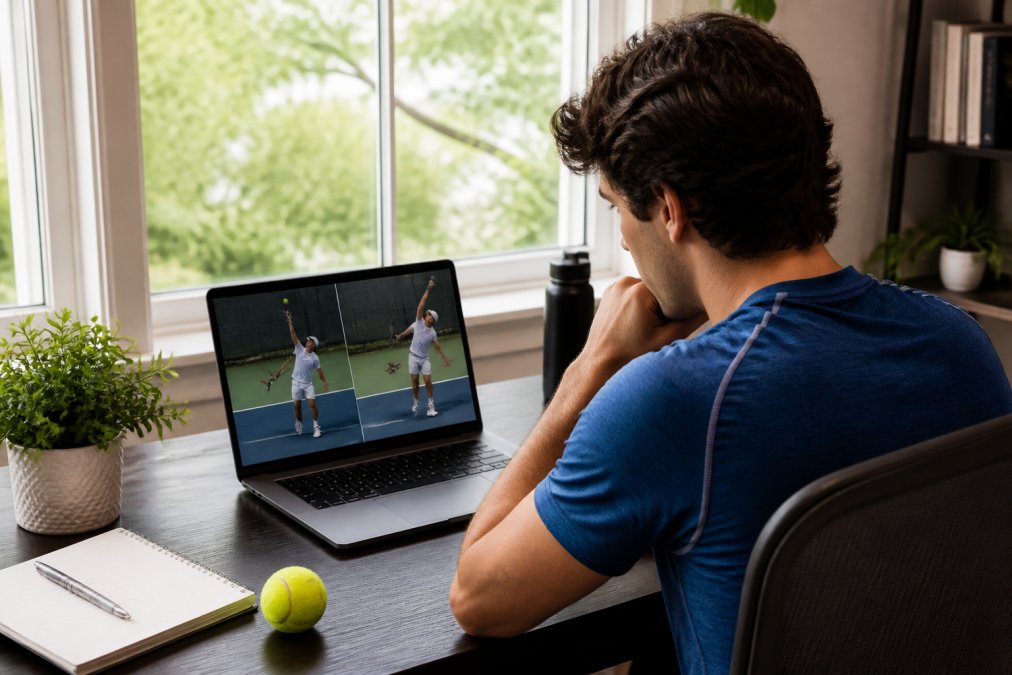
The workflow is straightforward: film your own play, submit video for analysis, receive personalized feedback identifying exactly what’s breaking down in your technique, and follow structured drills to fix it. This is targeted to your specific problems, not generic instruction. You also get access to exclusive in-person training camps for hands-on refinement after building fundamentals online.
Film yourself during actual match play, not just practice. Your technique breaks down under pressure, that’s where the real issues emerge. Coaches can spot problems in match footage that never show up in relaxed practice sessions.
TopCourt: Learning from 60+ Professional Coaches
TopCourt gives you access to a vast instructional library curated from over 60 professional players and coaches (topcourt.com). This works well for players who learn by watching, want to see multiple approaches to the same problem, and benefit from understanding the reasoning behind technique.
The platform includes instructional videos, drills, behind-the-scenes content, and stories from professional players. A Gold membership adds opportunities to win trips to Grand Slams and signed merchandise. The free tier lets you test the platform before committing.
TopCourt excels in breadth. You’re not locked into one coach’s philosophy. You can see how different top players approach the same shot with completely different techniques. This comparative learning is powerful for developing your own style rather than copying one template.
The limitation is clear: you get instructional content, not personalized feedback on your own game. TopCourt works best as a supplement to other coaching, not as your primary source. Use it to study specific techniques between personalized coaching sessions or to understand tactical awareness from professionals who’ve competed at the highest level.
TopCourt is ideal for players who want to understand the “why” behind technique and see multiple approaches. Use it between personalized coaching sessions, not as a replacement for feedback on your own game.
Tennis Academy vs Private Coaching: Which Fits Your Goals
Traditional academies offer intensive, daily technical refinement in a high-performance environment with other competitive players. You’re immersed, with your entire day revolving around tennis and daily feedback on structured progression.
But academies require geographic relocation, which is impractical for most adult competitive players with careers and families. They’re expensive and often optimize for junior development rather than adult competitive play, where psychology and tactical sophistication matter as much as footwork.
Private coaching offers flexibility: work with a coach once or twice weekly, maintain your job and family life, and focus on specific technical problems. The downside is inconsistency, a single local coach might excel at serve mechanics but be weak on mental conditioning.
The hybrid model, online coaching plus occasional in-person sessions, has become the default for serious adult competitors. You build fundamentals online, then attend camps for intensive hands-on work. Crunch Time Coaching bridges this gap by offering both online coaching and exclusive in-person training camps, allowing you to build fundamentals online and attend camps for intensive hands-on refinement.
How to Choose a Tennis Coach for USTA Tournaments
Choosing a coach for USTA tournament preparation requires identifying what’s actually limiting your tournament results. Are you losing because your fundamentals are weak, or because you can’t execute them under pressure? Are you losing because your opponent has better tactics, or because you can’t adapt strategy during the match? footwear for competitive players.
For technical problems, broken serve, inconsistent footwork, weak return, look for coaches with biomechanical training and video analysis capability. They need to identify the specific mechanical flaw, not just say "your serve is weak." For tactical and mental problems, look for coaches with competitive tournament experience who can teach match strategy, pressure management, and in-match adjustments.
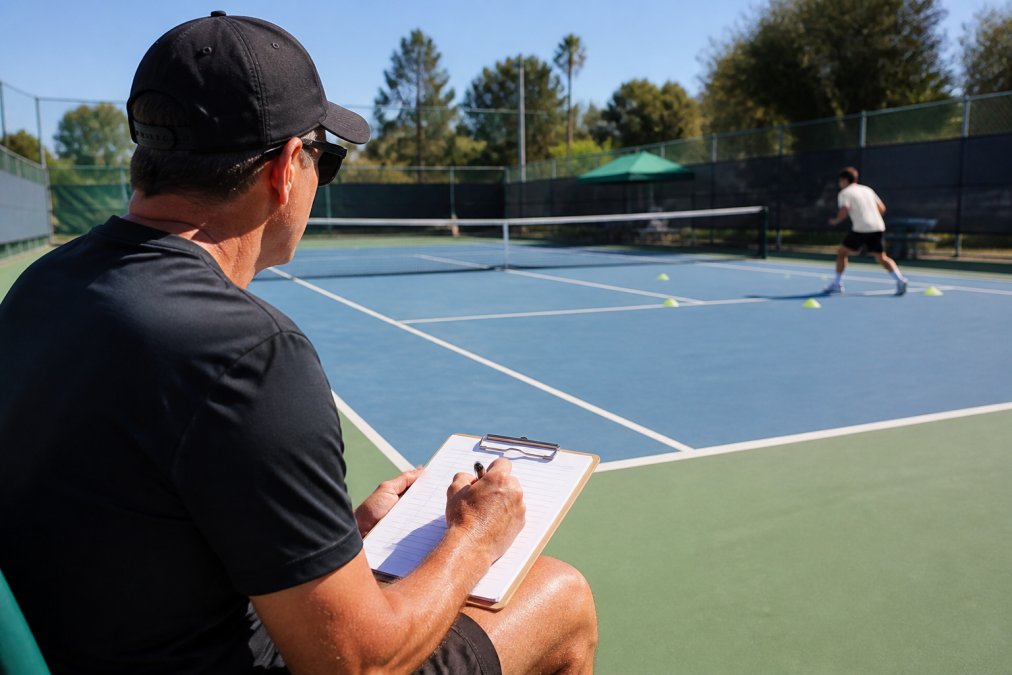
Ask potential coaches directly: What’s your track record with competitive adult players in USTA tournaments? How do you diagnose performance problems? Can you watch a match video and tell me specifically why I lost? What’s your approach to mental conditioning?
The best coaches for USTA tournament play have three qualities: they understand adult competitive psychology, they diagnose problems quickly and prescribe specific fixes, and they hold you accountable to executing those fixes.
Avoid coaches who promise fast transformations without understanding your specific problems. A coach who doesn’t diagnose first is guessing.
PlayYourCourt: Local Coaches and Community-Based Training
PlayYourCourt connects you with vetted local coaches, provides a practice-partner finder, and organizes Challenge League matches so you can compete against similarly-skilled players and climb rankings.
This model works well for adult competitive players who want community and structure without relocating. You can find a local coach through the platform, book lessons at your preferred court locations, and use the same platform to find matches and track competitive progress.
The strength is convenience and community. You have access to other competitive players, organized league play, and vetted local coaches. The weakness is geographic dependence, quality and availability vary dramatically by location. PlayYourCourt also offers instructional videos and fitness classes (inTENNSity workouts) to supplement local coaching.
Pricing starts at $4.99 per month (billed annually), with tennis lessons as a separate expense, making it an affordable entry point.
Key Differences: Specialization vs. Generalization in Coaching
Rick Macci’s model is specialized, he’s built his reputation on specific technical and developmental methodologies. But specialization has a cost: if his system doesn’t match your needs, you’re stuck.
The alternative is generalization: coaches who adapt their approach to your specific situation. PlayYourCourt’s local-coach model tends toward generalization. Crunch Time Coaching’s video analysis approach allows specialization in your specific problems rather than a one-size-fits-all methodology.
For competitive players, specialization in your specific problem usually beats generalization. A coach who specializes in serve biomechanics will fix your serve faster than a generalist. Identify your specific limiting factor (technical, tactical, mental, or physical), then find a coach or platform that specializes in fixing that factor.
Making Your Decision: Matching Your Needs to the Right Coaching Model
Map your situation against these variables: your specific technical or performance problems, geographic constraints, timeline, and budget.
If you have a specific technical problem and want personalized feedback: Crunch Time Coaching’s video analysis model is built for this. You submit footage, get targeted diagnosis, and follow structured corrections.
If you want to learn from multiple professional approaches: TopCourt gives you access to 60+ coaches’ methodologies. Use it between personalized coaching sessions or as your primary learning tool if you’re self-coaching.
If you’re in a metro area and want community, local coaching, and organized league play: PlayYourCourt connects you with vetted local coaches and competitive players.
If you want intensive development and can commit to temporary relocation: Crunch Time Coaching’s in-person training camps provide intensity without requiring permanent relocation.
Most competitive players benefit from combining models. Use Crunch Time Coaching for personalized technical feedback, supplement with TopCourt for understanding different approaches, and use PlayYourCourt to find local hitting partners and organized matches. This hybrid approach gives you technical precision, psychological support, and competitive context.
The key is matching the model to your actual constraint. If your problem is geographic isolation, online coaching removes that barrier. If your problem is lack of community, PlayYourCourt solves it. If your problem is understanding why your technique isn’t working, video analysis provides diagnosis. If your problem is mental toughness under pressure, you need a coach who specializes in that.
Frequently Asked Questions
What makes Rick Macci alternatives better for my specific game?
Rick Macci alternatives offer different coaching philosophies and delivery methods suited to various learning styles and competitive goals. Some emphasize personalized video analysis and mental toughness, while others provide access to multiple coaching perspectives or local instruction. The best choice depends on whether you need specialized biomechanical refinement, mental conditioning for tournaments, or structured long-term player development. Alternatives also vary in cost, accessibility, and whether they include in-person training camps alongside online content.
How effective is online tennis coaching for competitive players compared to academy training?
Online tennis coaching for competitive players can be highly effective when it includes personalized feedback, video analysis, and structured curriculum. The advantage is flexibility and access to specialized instruction without relocating. However, effectiveness depends on your commitment to filming your own sessions and implementing feedback consistently. Many competitive players combine online coaching with occasional in-person camps or local hitting partners to maintain match-play sharpness and get real-time court feedback.
How do I choose a tennis coach for USTA tournaments specifically?
When selecting a tennis coach for USTA tournaments, prioritize coaches with tournament preparation experience and knowledge of competitive match strategy. Look for coaches who emphasize mental toughness, tactical awareness, and match-play simulation, not just stroke production. Ask about their track record with players at your competitive level, their understanding of USTA tournament formats, and whether they provide pre-tournament preparation plans. Verify their credentials and coaching philosophy align with your specific weaknesses, serve consistency, return of serve, tiebreak mental conditioning, or footwork patterns.
Is a tennis academy or private coaching better for improving my game fast?
Tennis academy vs private coaching depends on your timeline and goals. Academies provide intensive, immersive training environments ideal for fundamental rebuilding and long-term athlete development. Private coaching offers personalized instruction tailored to your specific technical issues and competitive schedule, often faster for targeted improvement. For competitive players needing quick results before tournaments, private coaching with a specialized focus (serve technique, return of serve, mental conditioning) typically delivers faster visible improvements than general academy programs.
Can online coaching actually help with mental toughness for competitive matches?
Yes, online coaching platforms increasingly offer mental performance training specifically designed for competitive match play. These programs address tiebreak performance, pressure situations, and tactical decision-making through structured curriculum and challenge-based learning. Effectiveness depends on the coach's expertise in sports psychology and your willingness to practice mental conditioning techniques between matches. Many platforms combine mental training with technical refinement to ensure you're prepared both mentally and physically for tournament competition.
Finding the right Rick Macci alternative means understanding what’s actually limiting your competitive play and choosing a coaching model that directly addresses it. Crunch Time Coaching specializes in personalized video analysis combined with mental performance training, exactly what competitive players need when they can’t relocate but refuse to plateau. Reserve your spot today and start identifying the specific technical and mental barriers holding back your tournament results.
This article was written using GrandRanker