
Table of Contents
- Understanding Tennis Performance Plateaus
- How to Analyze Tennis Match Performance
- Tennis Practice Drills for Consistency
- Improve Tennis Match Mental Toughness
- Deliberate Practice and Training Periodization
- Recovery, Conditioning, and Equipment Factors
- Breaking Through: Your Action Plan
- Conclusion
Last Updated: August 26, 2026
Understanding Tennis Performance Plateaus
A tennis performance plateau is when your game stops improving despite consistent practice. At Crunch Time Coaching, we’ve worked with competitive players stuck at this exact point. The conscious competence model explains why: when your brain decides a skill is "good enough," it stops pushing for refinement. Your serve works. Your footwork gets you to the ball. The system feels complete, so your nervous system stops demanding improvement. The same repetitions that built the skill can’t advance it further, you need a different stimulus to trigger growth.
Why plateaus happen: The conscious competence model
When a skill becomes automatic, your brain allocates fewer resources to it. From a biological standpoint, you’ve achieved efficiency, but efficiency isn’t excellence. The players who break through understand this distinction. They don’t just practice their serve; they practice it under conditions that force their nervous system to adapt. Crunch Time Coaching emphasizes this principle: the goal isn’t to repeat what works, but to challenge what works so it becomes better.
Technical vs. mental barriers
Not all plateaus are created equal. Some are technical, your stroke mechanics have a ceiling limiting consistency. Others are mental, your competitive anxiety spikes in tiebreakers and costs you matches you should win. A technical barrier shows up in patterns: you miss the same shot in the same situation repeatedly. A mental barrier shows up differently: you hit the shot fine in practice, but in matches the same shot feels tight.
The diagnostic tool is simple: film yourself in practice and in matches. If the shot looks different, it’s technical. If the shot looks identical but the result changes, it’s mental.
How to Analyze Tennis Match Performance
Breaking through a plateau requires honest data about where you’re actually losing points. Vague sense doesn’t drive improvement. Specificity does.
Tracking key metrics and patterns
After each match, spend 10 minutes answering: What shot won me the most points? What shot lost me the most points? In what situation did I lose points? One competitive player discovered through match analysis that she won 85% of points when her opponent’s first serve was slower than 90 mph, but only 45% when it was faster (peer-reviewed research). This single insight redirected her entire training focus. Instead of generic serve-return drills, she started practicing against 110+ mph serves. Her return improved 20% in six weeks because the training matched the actual demand.
Identifying where you’re losing points
Are you losing points on your first serve? That’s technical. On your second serve? That’s often confidence disguised as technical. In rallies? That could be footwork, shot selection, or tactical awareness. The granularity of your analysis determines the precision of your fix. "I’m not serving well" is useless. "I’m double-faulting on second serve in deuce court when the pressure is on" is actionable. After every match, identify the three points that hurt most to lose.
Tennis Practice Drills for Consistency
Consistency in tennis isn’t about hitting perfect shots. It’s about hitting the right shot repeatedly under pressure.
Footwork and positioning drills
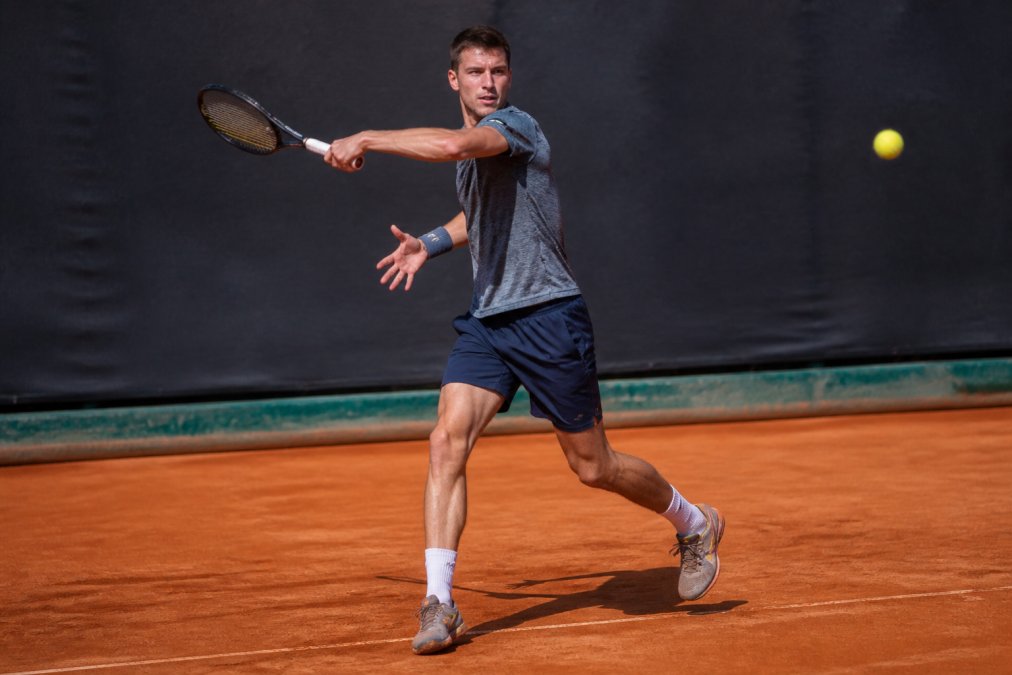
Footwork is the foundation of consistency. Most players do footwork drills wrong, slowly, without pressure, without game context. One specific drill that changes footwork quality: the "three-shot rally under pressure." Your partner feeds you a ball to your forehand. You hit a forehand down the line. They hit a passing shot attempt. You hit a volley or overhead. Do 10 sequences in a row, moving to the baseline between each one. The footwork demand is real because the situations are real. Players who break through do footwork drills that demand precision under fatigue.
Stroke mechanics refinement
Stroke mechanics matter, but not the way most players think. A "perfect" forehand that you can only hit when relaxed is worse than a slightly imperfect forehand you can hit consistently in any situation. The mechanics that matter are the ones that make the shot reliable under pressure. Film yourself hitting the shot, then film a professional hitting the same shot. Most of the time, it’s not that your entire swing is wrong, it’s usually one element: your toss drifts on the serve, your backswing is too long on the forehand, or your weight isn’t transferring on the slice backhand. Once you identify that one element, the fix is surgical.
Improve Tennis Match Mental Toughness
Mental toughness in tennis isn’t about being fearless. It’s about managing fear so it doesn’t control your decisions.
Managing competitive anxiety in tight moments
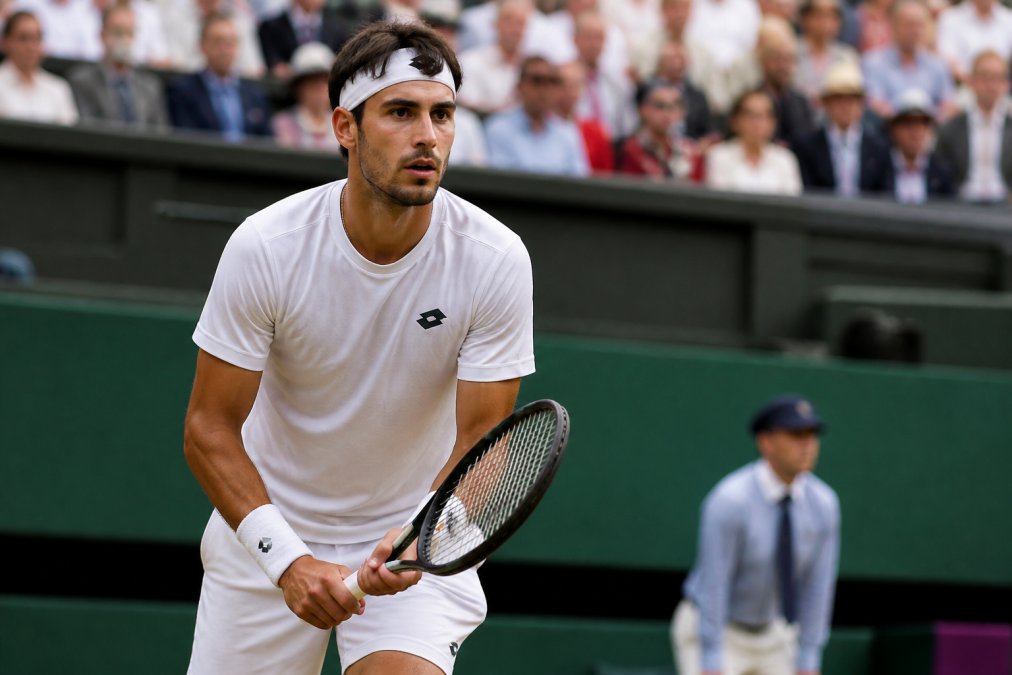
Competitive anxiety is normal. Elite players feel it. The difference is how they interpret it. Most players interpret anxiety as a signal that something is wrong. The players who perform best have reframed anxiety as arousal, the same physiological state can be interpreted as fear or as readiness.
A practical tool: before a tight moment, take three deep breaths and tell yourself what you’re about to do. "I’m about to serve at 30-40. I’m going to trust my serve. I’m going to commit to the first serve." Another tool: focus on what you can control. You can’t control whether your opponent makes the next shot, but you can control your serve toss, your footwork, and your decision to attack or defend. The third tool: pressure inoculation. You build mental toughness by practicing under pressure repeatedly. Play practice matches where losing has consequences.
Building resilience after setbacks
Every player loses points they should win. The difference between players who plateau and players who improve is how they respond. A player stuck in a plateau responds to a bad shot by tightening up. A player breaking through responds by analyzing it and moving on. "That was a forehand into the net. I’ll adjust my contact point on the next one. Next point."
A practical drill for building resilience: the "reset drill." Hit a shot. If it’s good, hit another. If it’s bad, pause, take a breath, and hit the next shot as if the bad one never happened. Do this for 50 shots. The discipline is to refuse the impulse to dwell on bad shots. increasing physical endurance.
Deliberate Practice and Training Periodization
The reason most players plateau is that their training stopped being deliberate. Deliberate practice is practice with a specific objective, immediate feedback, and continuous adjustment. It’s not comfortable. It’s also the only kind of practice that drives improvement.
Moving beyond repetitive routines
Most tennis training is repetitive: hit 50 forehands, hit 50 backhands, do 20 serves, play a match, repeat tomorrow. This routine builds baseline competence. It doesn’t build excellence. The players who break through do training that’s deliberately uncomfortable. One high-impact approach: constraint-based training. Instead of "hit 50 forehands," the constraint is "hit 50 forehands that land within three feet of the baseline." The constraint forces adaptation. Your brain can’t just repeat the same motion, it has to solve a problem.
Another approach: variability training. Don’t hit 50 identical serves. Hit serves from different positions, with different targets, after different warm-ups. Variability forces your nervous system to adapt to different conditions instead of relying on a choreographed routine.
Randomized and challenge-based training
Once you’ve built a base, the same periodization model stops driving improvement. The players who break through use randomized training. One day is footwork focus. The next is serve development. The next is tactical match play. The randomization keeps the nervous system engaged and learning. Challenge-based training is more specific: "I’m going to increase my first serve percentage from 55% to 65% in two weeks." The challenge gives you a specific target and deadline. Measure progress weekly and adjust your training based on results.
Recovery, Conditioning, and Equipment Factors
Many players overlook recovery and conditioning when stuck on a plateau. Overtraining syndrome is real, it shows up as persistent fatigue, decreased performance despite increased training, and difficulty recovering between sessions (the NIH). The fix is counterintuitive: decrease training volume and increase recovery. More sleep. More rest days. More low-intensity training.
Conditioning is also underrated. A player with poor conditioning will hit great shots at the start of a match and terrible shots at the end. Sport-specific conditioning matters more than general fitness. Court-based conditioning drills, lateral movement, explosive changes of direction, sustained effort with short rest intervals, improve match performance more than running.
Equipment can also affect your plateau. A racket that’s wrong for your swing will limit consistency. If you’ve been using the same equipment for years, it might be time to reassess.
Breaking Through: Your Action Plan
The path forward has three steps. First, diagnose: use match analysis to identify exactly where you’re losing points. Spend one week collecting this data. Don’t change anything yet. Just observe. Second, target: pick the one area that’s limiting you most. Design your practice around improving that specific area under pressure. Track your progress weekly. Third, measure: after four weeks, assess your progress in matches. Did your first serve percentage improve? Did you win more points on your forehand? If yes, continue. If no, adjust your approach and try again.
Crunch Time Coaching specializes in this exact process. Our step-by-step daily instruction and challenge-based curriculum are designed to help you move from conscious competence to unconscious competence at a higher level. Whether you’re working on your serve, sharpening your footwork, or building mental toughness, the framework is the same: specific diagnosis, targeted training, measurable progress.
A tennis performance plateau isn’t a permanent ceiling. It’s a signal that your current training isn’t driving improvement anymore. The players who break through understand that the same routines that got them to this level won’t take them further. They diagnose their specific limiting factor, design training that addresses it under pressure, and measure their progress weekly. This systematic approach works because it matches how the nervous system actually learns.
The question isn’t whether you can break through. The question is whether you’re willing to change your approach. If you’re ready to move beyond repetitive training and start deliberate practice that challenges your current level, research on motor learning and skill acquisition shows that focused, pressure-based training accelerates improvement significantly.
Reserve your spot today with Crunch Time Coaching and get access to our specialized challenge-based curriculum designed specifically for players stuck on a tennis performance plateau. Our step-by-step daily instruction and in-person training sessions will help you identify your limiting factor, train under pressure, and break through to the next level of competitive play.
| Training Component | Focus | Duration | Frequency |
|---|---|---|---|
| Match Analysis | Identify point loss patterns | 10 minutes per match | After every match |
| Constraint Drills | Develop specific shot consistency | 20-30 minutes | 3-4 times per week |
| Pressure Simulation | Build mental toughness under stress | 15-20 minutes | 2-3 times per week |
| Recovery Protocol | Prevent overtraining syndrome | Varies | Daily |
| Tactical Practice | Improve match decision-making | 30-40 minutes | 2 times per week |
Frequently Asked Questions
How can I identify if I have reached a tennis performance plateau?
A plateau shows up as stalled improvement over weeks or months despite consistent practice. Your match results plateau, you stop winning points you used to, and your serve speed or consistency doesn't improve. Track your match performance data, win-loss records, and specific shot patterns. If you're winning the same percentage of matches and losing to the same opponents repeatedly, you've likely hit a plateau. The key is honest self-assessment through match video review and performance metrics.
What's the difference between a technical plateau and a mental one?
A technical plateau means your stroke mechanics, footwork, or tactical awareness has stalled. You're hitting the same shots the same way and not progressing. A mental plateau involves losing focus in tight moments, competitive anxiety, or inconsistent decision-making during matches. Most players face both simultaneously. Analyze your match footage to spot technical breakdowns, then assess whether you're making the right tactical choices under pressure. This distinction shapes your training approach entirely.
How long does it actually take to break through a tennis performance plateau?
Breakthrough timelines vary by the cause and your training intensity. Focused deliberate practice targeting one technical issue can show results. Mental toughness improvements take longer, typically with consistent match play and intentional pressure training. Recovery and conditioning changes may also take time to compound. Most players see measurable improvement in match results when they address the root cause with structured coaching and consistent effort, not generic practice.
Can online coaching really help with my specific tennis technique issues?
Yes, but it depends on how feedback is delivered. Video analysis of your stroke mechanics, footwork, and match patterns works well remotely. A coach can identify technical breakdowns, positioning errors, and tactical weaknesses from recorded footage. Real-time feedback during live matches is harder online, but detailed video reviews of your actual play are just as effective as in-person observation. The best online programs combine video analysis with drills you can practice independently, then review again. In-person training camps add value for footwork refinement and serve technique where real-time correction matters most.
This article was written using GrandRanker