
Last Updated: November 10, 2026
Quick Summary
Virtual tennis coaching works through video review and remote correction, so it suits players who can film their practice and want frequent feedback. Local private lessons give real-time, hands-on correction on court, which suits players rebuilding a stroke from scratch. Many players combine both, using virtual programs for daily structure and periodic in-person sessions.
- Local private lessons give immediate, in-person correction of footwork and stroke mechanics.
- Virtual coaching feedback can arrive daily when you film and send clear footage.
- Online programs usually charge a program fee, while local lessons are priced per session.
- Virtual coaching typically requires you to book and arrange your own court time and hitting partner.
- A hybrid plan can cost less than weekly lessons while keeping periodic in-person checks.
Table of Contents
- Virtual Tennis Coaching vs Local Private Lessons at a Glance
- How Each Format Delivers Feedback and Correction
- What Private Tennis Lessons Cost Compared With Online Programs
- Online Tennis Coaching: What It Includes in Practice
- Court Access, Repetitions and Hybrid Plans
- Are Tennis Lessons Worth It for Your Goals?
- How to Choose a Tennis Coach for Your Next Step
- Frequently Asked Questions
Virtual tennis coaching and local private lessons both aim to fix your game, but they work very differently. Choosing between them comes down to how you learn best, what feedback you need, and what you can spend. This guide from Crunch Time Coaching compares the two formats so you can decide with the facts in front of you.
Private tennis lessons with a local coach vary in price by region and coach experience. Online programs price differently, so the total cost depends on how often you train and whether you pay for court time on top of coaching.
Virtual Tennis Coaching vs Local Private Lessons at a Glance
| Factor | Virtual Coaching | Local Private Lessons |
|---|---|---|
| Feedback | Recorded video review, remote correction | Real-time, in person |
| Practice access | Works with your own court time | Coach brings structure to the court |
| Cost pattern | Subscription or program fee | Per-lesson, often $40+ per hour |
| Best for | Repetition and daily structure | Hands-on technical correction |
Virtual coaching gives you structure and frequent feedback. Local lessons give you a coach beside you on the court.
How Each Format Delivers Feedback and Correction
Local private lessons give you immediate correction. A coach sees your footwork and stroke as you hit, then adjusts your grip or stance in the same moment. That speed matters most when a flaw is fresh.
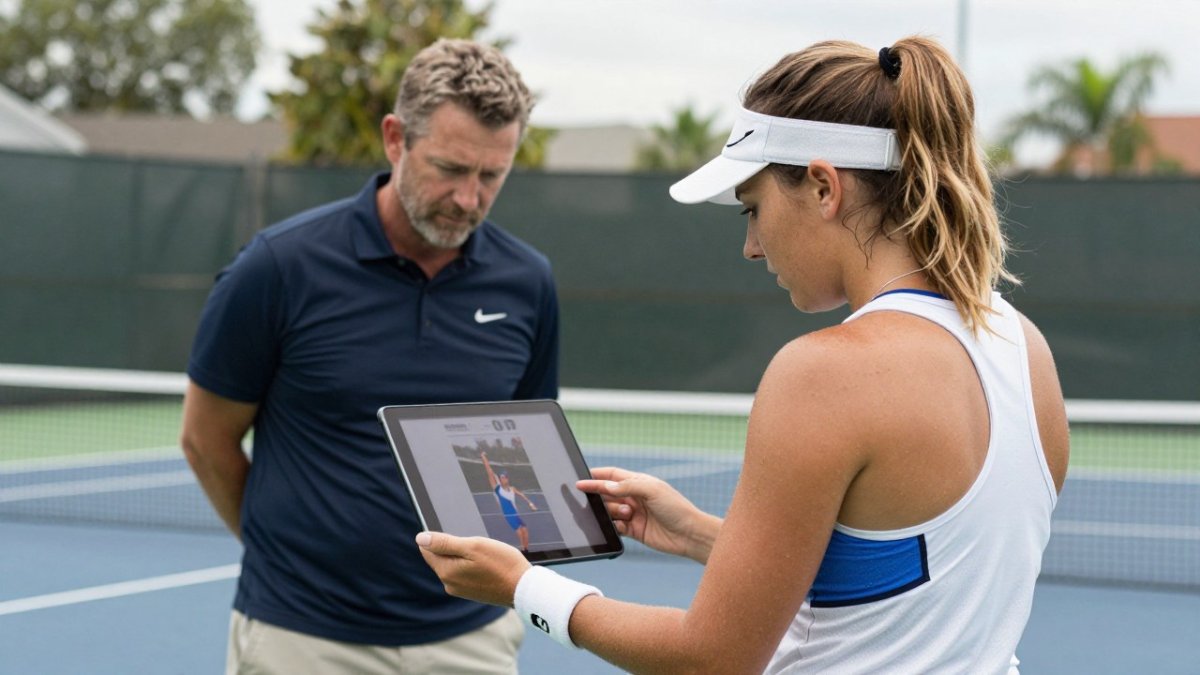
Virtual coaching works differently. You film your practice, and the coach reviews the footage and sends specific corrections. Research on expert versus novice coaching perceptions suggests that coaches with more experience focus their analysis on different details, which is why the quality of feedback matters more than the delivery method alone.
Feedback quality varies by format. Watch for these differences:
- Local lessons: Correction is instant, but you may only get one hour of feedback per week.
- Virtual coaching: Feedback can arrive daily, but you must film and send clear footage.
Many players find that daily virtual feedback builds habits faster than weekly in-person sessions.
What Private Tennis Lessons Cost Compared With Online Programs
Local private lessons charge per session. Rates depend on the coach and your location. Marketplaces like MyTennisLessons list coaches across many cities, so prices vary.
Online programs typically charge a monthly or program fee instead. Pricing depends on program, dates, and delivery, so check the Crunch Time Coaching website for current prices or request a quote. Factor in your court time, too, because local lessons often include court access while online coaching does not.
Private tennis lesson rates per hour
Online Tennis Coaching: What It Includes in Practice
Virtual coaching is not one product. Depending on the provider, a package can include some or all of the following components, and comparing them to a local lesson only works if you know which pieces you are actually buying.
Video analysis of your practice. You record drills or rallies on your own phone or tripod, upload the clips, and the coach annotates them with slow-motion review, drawn lines for stance and contact point, and written notes. This is the core of most programs.
Live video sessions. Some programs add scheduled calls in which the coach watches you hit in real time through a camera and gives verbal cues. These sessions replicate part of the on-court experience but cannot adjust your physical position, so they suit players who already have basic footwork.
Written or app-based plans. Between reviews you usually receive a drill sequence, a repetition target (for example, a set number of serves or cross-court forehands per session), and a schedule. The value of this component depends on whether you actually complete the work.
Coach messaging. Turnaround on questions and footage review is a practical difference from local lessons. Ask any provider how long a standard review takes and whether there is a cap on uploads per week. Turnaround of one to three days is a common benchmark, but it is worth confirming in writing.
Watch out: Video quality determines feedback quality. A phone propped at waist height from a single side angle often hides the racket path, so most coaches ask for a sideline camera at roughly shoulder height, a stable mount, and good lighting before they can give reliable correction.
Online coaching fits players who can film consistently, self-monitor between reviews, and accept that a coach cannot physically move their feet. It fits less well for a player rebuilding a stroke from scratch, who usually benefits from hands-on correction in the first weeks.
USTA player development resources
Court Access, Repetitions and Hybrid Plans
The real cost of each format is rarely the coaching fee alone. Court time, travel, and equipment often decide which option is affordable.
Local private lessons usually include court access for the lesson window, but that window is short. A one-hour lesson gives you less hitting time once warm-up and explanation are subtracted, so if you book a lesson and then want extra hitting, you may pay again.
Virtual coaching separates coaching from court time. You pay the program fee, then book your own court, which can be a public park, a school, or a club. This gives you more repetitions per dollar if you practice regularly, but it means you must arrange the rally partner or ball machine yourself. Adding a ball machine or a hitting partner for an hour is a real expense to plan for.
Here is a simple way to compare a month of training:
- Weekly local lessons: four one-hour sessions, coaching fees plus court time that may or may not be included, and travel to and from the court each week.
- Virtual coaching, self-booked courts: a program fee, then about three to four court bookings and a hitting partner or machine, plus the cost of filming equipment if you do not already own a tripod.
- Hybrid plan: the virtual program for daily structure, with one local session every three to four weeks for hands-on correction.
The hybrid plan often costs less than weekly lessons while keeping an in-person check on mechanics. To run it well, film your practice sessions at the same court and angle each time, so the coach can track changes in your technique rather than camera differences. Ask the coach which flaws need in-person correction and book the local session when you hit a plateau or a fundamental stroke problem.
Track progress with concrete indicators rather than general impressions. Useful measures include the percentage of first serves that land in, unforced errors per match or per set in practice games, and how often your forehand contact point stays consistent across a filmed session. Review these numbers every four weeks, so you can tell whether a format is working for you.
Are Tennis Lessons Worth It for Your Goals?
Lessons pay off most when you have a specific goal, such as fixing a serve or improving footwork for league play. A single focused lesson can change a stroke quickly, but lasting improvement comes from repetition between sessions.
If your goal is general fitness or casual play, a few local lessons may be enough. If you compete and want a measurable skill upgrade, a structured program with frequent feedback often delivers more value per dollar.
How to Choose a Tennis Coach for Your Next Step
Start by deciding how you learn. If you need a coach beside you, book local private lessons. If you can film and follow a plan, virtual coaching gives you more repetitions for less time spent traveling.
Use these questions to narrow your choice:
- Do I need hands-on correction, or can I work from video?
- How many practice sessions can I fit each week?
- What is my total budget, including court time?
- Do I want daily structure or a few focused sessions?
Once you answer these, compare specific programs and coaches against your answers. Crunch Time Coaching offers online instruction and in-person training camps, so you can start remotely and add hands-on sessions later.
Ready to build a plan that fits your game? Contact Crunch Time Coaching to see which format matches your goals and schedule.
Frequently Asked Questions
Are private tennis lessons worth it?
Private tennis lessons are worth it when you have a specific goal, such as fixing a serve or sharpening footwork, and you will practice what the coach assigns between sessions. Individual attention lets a coach diagnose your exact technique issues and adjust drills in real time, which group clinics rarely do. Their value drops if you book lessons without a plan or without court time to apply the changes. Set one or two measurable goals before you start and review progress every four to six weeks to judge whether the cost is paying off.
How does virtual tennis coaching compare with in-person lessons?
Virtual tennis coaching relies on video you record and send, then feedback delivered through annotated clips or scheduled reviews. In-person lessons give real-time correction on the court, which is faster for timing and footwork problems. Virtual coaching works well for stroke mechanics you can see on video, such as the serve motion or grip, and it lets you train on your own schedule. Many players combine both: online programs for daily structure and periodic local sessions for live correction.
How much do private tennis lessons cost?
Private tennis lesson rates vary by region and coach experience. Rates for private in-person instruction vary by region and coach experience. Court fees are usually separate. Online coaching programs are priced differently, often as a monthly subscription. Pricing for Crunch Time Coaching depends on program, dates and delivery, so check the website for current prices or request a quote.
What should you look for in a tennis coach?
Look for a coach who asks about your goals and playing history before proposing a plan, and who can explain how they will measure your progress. Verify credentials and ask for references or sample feedback. For online coaching, confirm how quickly you receive feedback and what format it takes. For local coaches, check availability, court location and whether they offer both private and group options. A good coach adjusts the plan to your skill level rather than running the same drills for everyone.
