
Last Updated: October 24, 2026
Quick Summary
Tennis serve spin is generated through a low-to-high racket path that brushes the ball, combined with a continental grip that enables wrist pronation. Proper toss placement, contact point, and follow-through work together to create the spin that makes your serve difficult for opponents to read and return.
- Continental grip with index knuckle on third bevel is the foundation for generating spin on serves
- Toss placement differs by serve type: 12 inches in front for topspin, 6-12 inches behind your head for kick serve
- Racket path must travel low-to-high and brush the ball’s back surface, not hit through it
- Second serve topspin should land 2-3 feet inside the baseline for 85% consistency instead of aggressive placement
- Target Box Drill, Spin Measurement Drill, and Second Serve Focus Drill build consistency through deliberate practice
Table of Contents
- Why Tennis Serve Spin Matters for Your Game
- Grip and Hand Position: The Foundation for Spin
- How to Hit a Topspin Serve with Proper Racket Path
- How to Hit a Kick Serve: Mastering the High-Bouncing Second Serve
- Tennis Serve Spin Drills to Build Consistency
- Second Serve Topspin Technique: Control Meets Aggression
- Troubleshooting Your Spin Serve: Common Ball Flight Problems
- Start Your Spin Serve Transformation Today
- Frequently Asked Questions
Why Tennis Serve Spin Matters for Your Game
Tennis serve spin is one of the most powerful weapons in competitive play, separating players who plateau from those who keep climbing. Heavy spin forces your opponent to adjust their positioning, makes the ball bounce unpredictably, and gives you control even when you’re hitting hard.
Here’s what most players miss: raw speed alone doesn’t win matches. According to research on tennis serve biomechanics published in PubMed Central, effective servers use rear lateral shoulder and pelvis tilt to generate both speed and spin during the acceleration phase.
At Crunch Time Coaching, we’ve seen players transform their game by adding spin to their serves. Once they added topspin or a kick serve, their confidence jumped and they could attack on second serve instead of just getting it in.
The stakes are real. In tiebreakers, a reliable second serve with spin is the difference between holding serve and handing your opponent break points.
Grip and Hand Position: The Foundation for Spin
Your grip determines what kind of spin you can create. It’s the first decision you make before the toss even goes up. The continental grip is the foundation for generating spin on most serves.
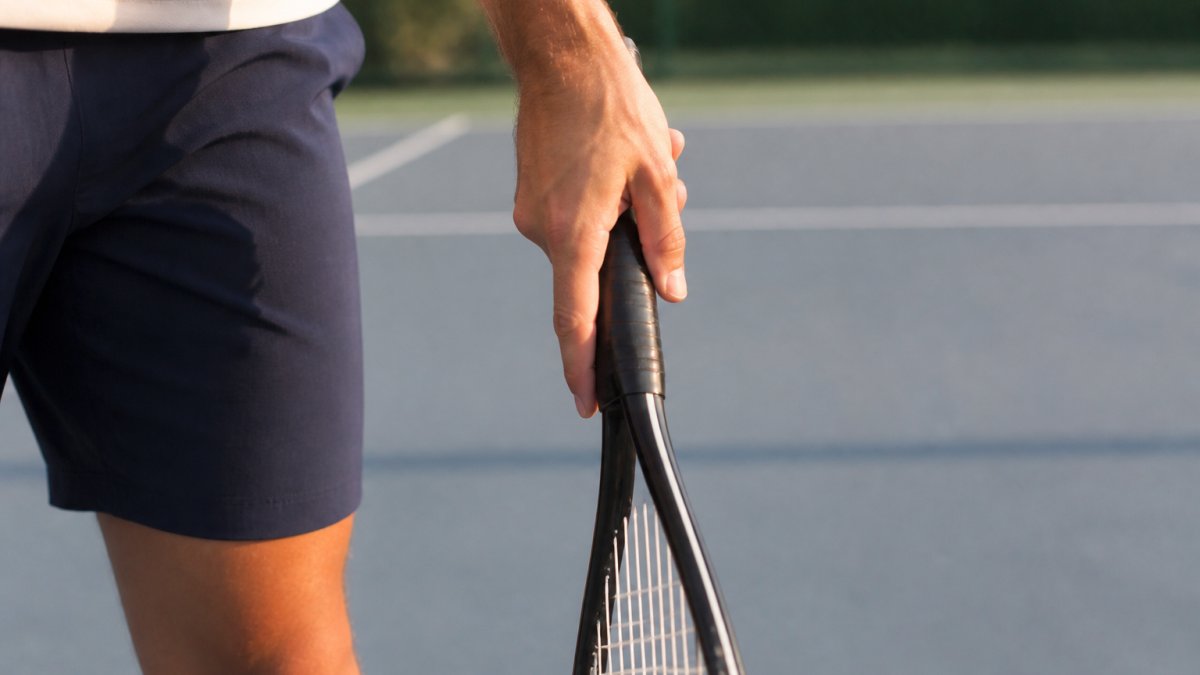
With a continental grip, your index knuckle sits on the third bevel of the racket handle and your thumb runs along the bottom. This grip naturally closes the racket face slightly, which is essential for brushing the ball and creating spin.
The key difference between grips comes down to wrist position at contact. A continental grip lets your wrist pronate naturally during the stroke. Pronation is the inward rotation of your forearm, turning the racket face from open to closed as you accelerate through the ball.
Here’s a practical checkpoint: when you finish your serve, your palm should face the ground. That’s a sign your wrist can’t pronate enough. Tennis Serve Grip Variations for Different Spins explores grip adjustments for different spin types to help you match your hand position to your serve goals.
Watch your grip throughout practice. Many players adjust it between serves without realizing it. Consistency in grip position leads to consistency in spin.
How to Hit a Topspin Serve with Proper Racket Path
Topspin is the most common spin type on first serves in modern tennis and the most reliable way to add spin to your second serve. The racket path is everything: brush up the back of the ball, don’t hit through it.
The motion starts with the racket coming from below the ball at contact, traveling low to high and moving forward and upward at the same time. Think of brushing the ball’s back surface.
Most players go wrong by swinging too flat, which doesn’t create spin. You need angle: the racket face slightly closed at contact and your wrist pronating hard through the ball. That pronation, combined with the upward brush, creates the topspin that makes the ball dip into the box.
The follow-through tells you if you did it right. After contact, your racket should continue upward and across your body, wrist finishing with your palm facing inward. If your racket drops or stops after contact, you didn’t brush through the ball enough.
A practical drill: practice your toss placement first, since most topspin issues start with a bad toss. Once it’s consistent, the racket path becomes easier to repeat. Step by Step Tennis Serve Grip Change for Kick Serve deepens your understanding of how grip adjustments enable different racket paths for topspin serves.
How to Hit a Kick Serve: Mastering the High-Bouncing Second Serve
The kick serve is your safety net on second serve. It bounces high and pulls your opponent out of the court. The racket path is steeper than a topspin serve, and the contact point is different.
For a kick serve, your toss goes higher and more behind your head. This sounds counterintuitive, but a toss directly in front of you won’t let you get under the ball enough. Toss 6-12 inches behind your head, depending on your flexibility, so your racket can start lower in the acceleration phase.
The racket path for a kick serve starts even lower than topspin, brushing the back and bottom of the ball in a scrape upward and slightly sideways. Your wrist pronates but also supinates slightly, the outward rotation of your forearm.
The bounce is your feedback. A good kick serve bounces up toward the opponent’s shoulder or above their head. If it bounces low or goes long, your contact point was too high or your brush too forward.
Here’s a checkpoint: can you hit three kick serves in a row that land in the box? If not, slow down. Speed comes later. Get the motion consistent first. Kick Serve vs Slice Serve: Technique Comparison compares the kick serve to the slice serve so you understand which spin technique suits your game style.
Tennis Serve Spin Drills to Build Consistency
Consistency beats perfection. You can hit one great serve and lose focus on the next five. Drills build the muscle memory that makes good serves automatic.
Target Box Drill: Mark a smaller box inside the service box using cones or tape. Start with your normal toss and focus on landing serves in that smaller target. Do 20 serves. Count how many land in the box.
Spin Measurement Drill: Ask a practice partner to watch your serves and describe the bounce. Does it kick high, dip fast, or move sideways? Their feedback reveals what your racket path is actually creating.
Second Serve Focus Drill: Play a full match but only practice your second serve. Don’t worry about first serves. This removes the temptation to go flat and hard. You’ll naturally develop more spin because that’s your only option.
Progression Drill: Hit 10 serves focused on toss placement, then 10 on racket path, then 10 on contact point, then 10 on follow-through. Repeat the sequence three times. Isolating one element at a time builds the components separately before you combine them.
Why Consistency Is Key in Tennis Serve Development explains why consistency matters specifically in serve development to reinforce why these drills work.
Second Serve Topspin Technique: Control Meets Aggression
Your second serve is where matches are won or lost. A weak second serve gives your opponent a free point. A second serve with topspin gives them a problem to solve.
The difference between first serve and second serve topspin is speed and margin. You’re hitting the same spin with the same racket path and grip, but with more control.
On second serve, aim 2-3 feet inside the baseline instead of right on the line. That margin gives you room for error. Your first serve can be aggressive because you have a second serve to fall back on, so trust your safety shot. A second serve that lands in the box 85% of the time beats one that lands 60% of the time with more spin.
Here’s the mental shift: your second serve topspin is not a defensive shot but an offensive opportunity. Heavy topspin makes the ball bounce high and pulls your opponent back, giving you time to move forward and take the net.
The contact point on second serve is slightly lower than first serve topspin. You’re brushing more of the ball’s side and back. This creates a combination of topspin and sidespin that’s harder to predict.
Practice second serve topspin in match situations. In drills, it feels easy. In a tiebreaker with the match on the line, it’s different. Build that pressure into your practice.
Troubleshooting Your Spin Serve: Common Ball Flight Problems
Your serve tells you what went wrong. The ball flight is feedback.
Ball goes long: Your contact point is too high, or you’re hitting through the ball instead of brushing it.
Ball lands short in the box but bounces low: You’re not getting enough upward brush. The racket path is too flat.
Ball goes wide: Your toss is too far to the side, forcing you to reach and changing your racket path.
Ball goes into the net: Your contact point is too low, or your follow-through is dropping. Make sure you’re hitting at the peak of your toss.
Ball has no kick on second serve: You’re not getting under the ball enough because your toss is too far in front.
Ball moves too much sideways: You have sidespin mixed in with your topspin. This happens when your racket path is too sideways instead of up-and-forward.
Track these patterns in practice. Write down what happens with each serve. Over time, you’ll see which issues repeat. Those are your focus areas.
Start Your Spin Serve Transformation Today
Adding spin to your tennis serve is not magic. It’s a sequence of small adjustments that compound into a completely different serve.
The players who transform their serves fastest practice with purpose.
At Crunch Time Coaching, we’ve built a system that takes players through this progression step by step. Our daily lessons break down the serve into teachable components.
If you’re ready to move past the plateau, How to Get More Spin on Your Tennis Serve provides additional techniques for adding spin to complement what you’ve learned here.
Reserve your spot with Crunch Time Coaching today and start building the spin serve that wins matches.
| Element | What It Does | Your Focus |
|---|---|---|
| Grip (Continental) | Enables wrist pronation and closed racket face | Keep index knuckle on third bevel |
| Toss Placement | Determines contact point and racket angle | 12 inches in front for topspin; 6-12 inches behind for kick serve |
| Racket Path (Low-to-High) | Creates the brush that generates spin | Exaggerate the upward motion in drills |
| Contact Point | Determines spin type and direction | Peak of toss for topspin; lower for kick serve |
| Follow-Through | Confirms the motion was complete | Racket finishes high and across your body |
| Pronation | Closes the racket face and accelerates the spin | Feel your wrist rotate inward through contact |
How the tennis serve generates speed and spin through shoulder and pelvis rotation
Biomechanics of racket sports and serve mechanics
Tennis serve technique and spin generation research
Frequently Asked Questions
How do you get more spin on a tennis serve?
More spin comes from three factors: a continental or semi-western grip, brushing the ball with an upward racket path, and toss placement slightly in front and to the right (for right-handers). The 2011 research on the eight-stage serve model shows that effective servers use rear lateral shoulder and pelvis tilt during acceleration to generate speed and spin. Combine these elements with consistent practice, and you’ll see measurable improvements within weeks.
What grip is best for a spin serve?
The continental grip is the gold standard for spin serves because it naturally closes the racket face and allows you to brush the ball upward. Some players use a semi-western grip for added topspin on second serves. Avoid the eastern forehand grip, it closes the face too much and limits your ability to generate the brushing motion needed for reliable spin.
How should I toss the ball for a topspin serve?
For topspin, toss the ball slightly in front of your body and to the right (right-handers), about 12 to 18 inches in front of the baseline. This placement forces you into the brushing motion naturally. For kick serves, toss the ball slightly more to the right and a bit higher to allow for the extreme racket path angle. Consistency in toss placement is as important as the grip, practice your toss without hitting to lock in the placement.
How long does it take to develop a reliable kick serve?
Developing a reliable kick serve requires focused practice. The kick serve is more complex than topspin because it requires precise timing, extreme racket path angle, and pronation. Age and prior serve experience can influence the time it takes to develop consistency.
